Crack the Clan Code: Turning Feudal Japan's Messenger Tricks Into Your Family's Secret Language
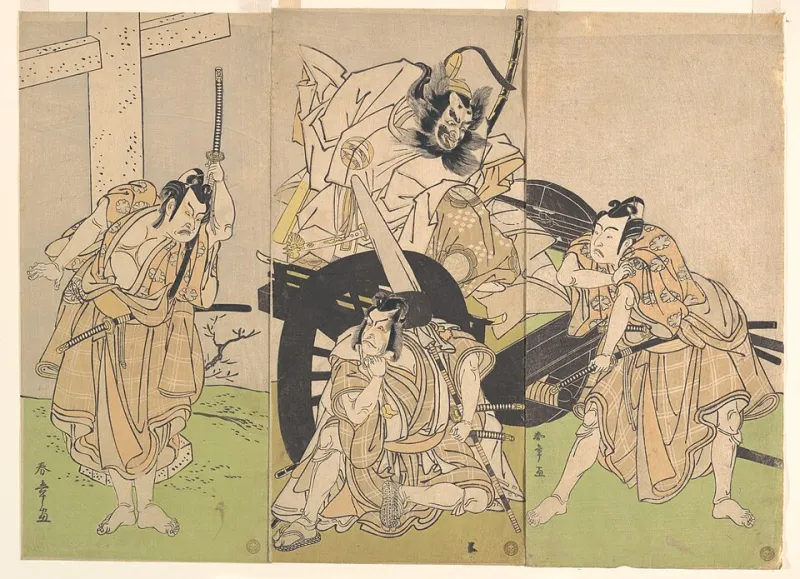
Photo: Creator:Katsukawa Shunshō 勝川春章, CC0, via Wikimedia Commons
Every family has inside jokes. Very few families have inside codes.
That distinction matters, and feudal Japan is partly to thank for the idea. The messengers and scouts of the Sengoku period—men and women tasked with carrying intelligence across hostile territory—developed a toolbox of encryption and concealment methods so effective that some remain studied by cryptography enthusiasts today. Five of those techniques translate beautifully into activities you can run at a kitchen table with paper, a candle, and a little imagination.
1. The Substitute Character System (Inga-hō)
Inga-hō (隠字形) was a substitution method: assign one character to stand in for another according to a pre-agreed key, so a message reading innocuously on the surface carried a hidden meaning underneath. A line of poetry might actually say reinforcements arrive at dawn.
Your family version: Create a substitution key where each letter of the alphabet maps to a household symbol—a spoon for S, a cat for C. Tape the key inside a favorite book, and have kids write "secret notes" to each other or to you. Younger children love it; older ones can graduate to rotating the key weekly, which is genuinely how cipher discipline works.
2. Fire-Revealed Writing
One documented shinobi technique involved writing with invisible ink—rice water was a common choice—that became legible when the paper was heated, the sugars browning to reveal the message. Historians of ninjutsu texts such as the Bansenshūkai describe various concealment inks and heat-reveal methods.
Your family version: Classic lemon-juice invisible ink. Write with a cotton swab, let it dry, then (with adult supervision) hold the paper near a warm lamp or iron. A Saturday afternoon scavenger hunt where every clue is invisible until revealed will occupy children far longer than any screen—and teaches the historical principle that information can hide in plain sight.
3. The Grid Cipher (Goshiki-mai and Layered Writing)
Some concealment methods hid the true message within a larger block of innocent text, readable only by picking out characters at set positions—every third character, or the top line of each column.
Your family version: Write a short, boring paragraph about dinner or homework. Then agree that the real message is the first letter of every sentence, or the fourth word of every line. This is a genuine acrostic cipher, and crafting a decoy paragraph that sounds natural is a wonderful writing exercise in itself.
4. Split Delivery
Feudal couriers sometimes divided a message among multiple carriers or encoded halves in separate objects, so no single captured person or item revealed the whole. Security through distribution.
Your family version: The two-piece treasure hunt. Hide half a coded clue in one place and half in another; neither means anything alone. Siblings must cooperate to solve it—a rare activity that turns rivalry into alliance.
5. The Memory-Only Message
The most secure transmission was no message at all. Scouts were trained to memorize intelligence and deliver it verbally, leaving nothing for an enemy to intercept. In an era of screenshots and cloud backups, the idea of a message that exists only in a human mind feels almost radical.
Your family version: The spoken code word. Agree on a family passphrase that changes monthly—something only members know. It sounds like a game to children, and it is, but it also plants an early seed: not everything needs to be written, posted, or shared.
Why This All Matters More Than It Seems
On the surface, these are rainy-day activities. Underneath, they teach something the shinobi understood instinctively: information is valuable, protecting it is a skill, and trust is the foundation of every code. A cipher only works because two parties share a secret honestly.
Start with lemon juice and a treasure map. What your family builds on top of it—a shared language, a tradition, a small civilization of inside meaning—will outlast any single game. The messengers of old Japan would recognize the impulse immediately.