Laid Off, Not Defeated: How Bushido Is Giving Displaced Corporate Americans a Warrior's Blueprint for What Comes Next
Laid Off, Not Defeated: How Bushido Is Giving Displaced Corporate Americans a Warrior's Blueprint for What Comes Next
The notification arrives without ceremony. A calendar invite, a Zoom link, a fifteen-minute meeting with HR. Then, in a matter of moments, a career built over decades is placed on indefinite hold. For millions of Americans who have faced mass layoffs in recent years — across technology, finance, media, and manufacturing — the experience is less like a setback and more like a rupture. The professional identity that once anchored daily life is suddenly gone, and what remains is a disorienting silence.
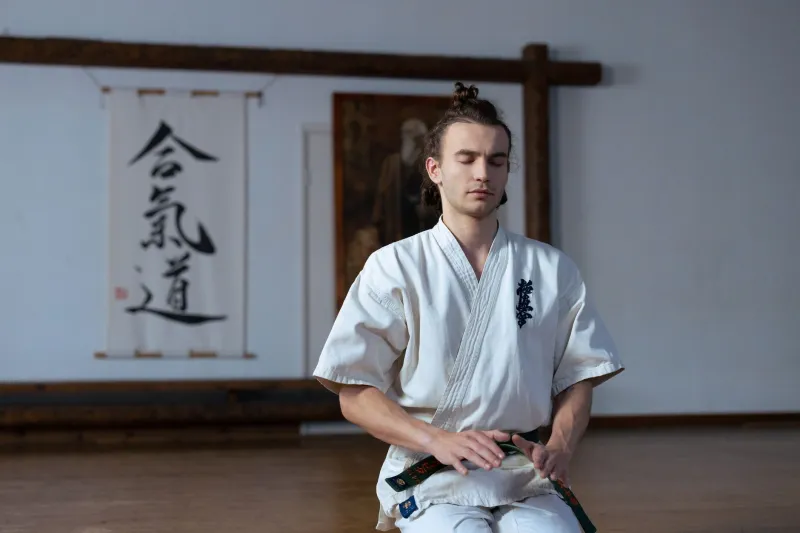
What many of these individuals are discovering, however, is that the silence does not have to be empty. Across the country, a quiet but meaningful movement is taking shape in dojos, community training halls, and home practice spaces. Former executives, mid-career managers, and longtime corporate professionals are turning to the principles of Bushido — the ancient Japanese code of the samurai — not as a motivational novelty, but as a rigorous, structured framework for navigating one of life's most destabilizing transitions.
The Weight of a Title That No Longer Exists
For many Americans, professional identity is not simply what they do — it is who they are. The business card, the corner office, the organizational chart: these are not mere symbols of employment. They are, for a significant portion of the workforce, the architecture of self-worth.
When that architecture collapses, the psychological consequences are well-documented. Studies consistently link involuntary job loss to elevated rates of anxiety, depression, and diminished self-esteem. The challenge is not only financial. It is existential.
Marcus T., a former senior director at a Chicago-based logistics firm, described his experience following a company-wide restructuring that eliminated his department entirely. "I had spent seventeen years building something," he said. "And then one morning I was just — a person with a LinkedIn profile and no place to be."
It was his daughter, a college student with an interest in Japanese martial arts, who first suggested he visit a local dojo. He went reluctantly. He returned the following week. Within three months, the discipline of structured training had given him something the job search could not: a daily practice rooted in principles rather than outcomes.
Rectitude: The First Principle of Recovery
In the classical formulation of Bushido, gi — often translated as rectitude or moral rightness — is considered the foundational virtue. It is not simply honesty in the conventional sense. It is the capacity to see clearly, to assess a situation without distortion, and to act in alignment with one's deepest values regardless of external pressure.
For the newly unemployed, rectitude offers a powerful corrective to two of the most common psychological traps: denial and self-blame. Many displaced workers oscillate between minimizing the severity of their situation and catastrophizing it entirely. Bushido's emphasis on clear-eyed assessment — seeing things as they are, neither more nor less — provides a stabilizing middle ground.
Practically speaking, instructors at HanzoEdu encourage students in career transition to apply this principle through structured journaling: writing honestly about what they valued in their previous role, what they compromised, and what they genuinely wish to pursue next. The exercise is deceptively simple. The insights it produces are often profound.
Courage Is Not the Absence of Fear
The samurai understood something that modern career culture frequently obscures: courage is not the elimination of fear, but the decision to move forward in its presence. Yu, the Bushido virtue of bravery, is not recklessness. It is the disciplined willingness to face uncertainty without retreating into paralysis.
This distinction matters enormously for professionals navigating job loss. The fear of financial instability, of professional irrelevance, of starting over in an unfamiliar industry — these are legitimate concerns. Dismissing them with hollow affirmations serves no one. Acknowledging them clearly, and choosing to act anyway, is the warrior's approach.
Denise R., a former marketing director from Austin who was laid off during a wave of tech sector contractions, began training in kenjutsu — the classical Japanese art of swordsmanship — eight months after losing her position. "There's something about picking up a bokken and learning a form that you have absolutely no natural ability for," she said. "It teaches you that discomfort is not the same as failure. You fall short, you adjust, you try again. That's the whole practice."
She has since launched a brand consultancy that she describes as more aligned with her values than any corporate role she previously held.
The Dojo as a Structured Container for Transition
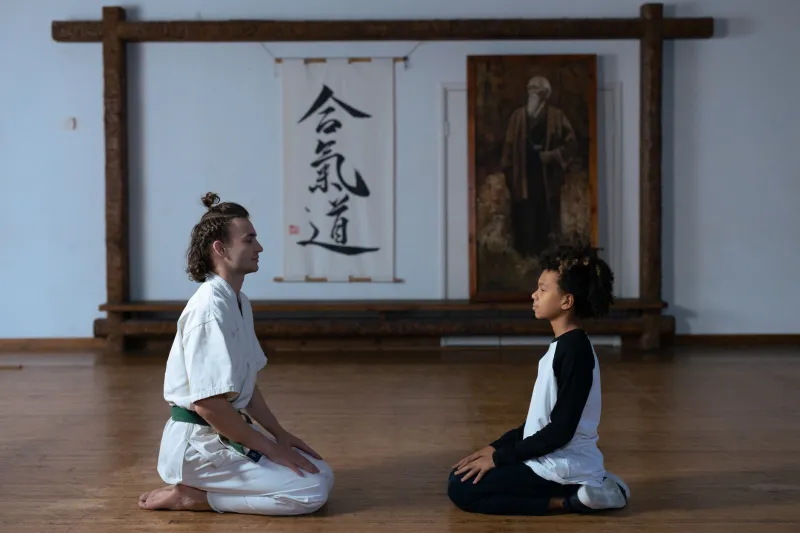
One of the underappreciated gifts of martial arts training is its structure. The dojo operates according to clear hierarchies, defined expectations, and measurable progression. For individuals whose daily routines have been suddenly dismantled by unemployment, this structure is not trivial — it is therapeutic.
Research in behavioral psychology consistently demonstrates that routine and goal-directed activity are among the most effective buffers against the depressive effects of job loss. The dojo provides both. Students arrive at a designated time, train within a defined system, and earn advancement through demonstrated effort. Progress is visible. The feedback loop is immediate.
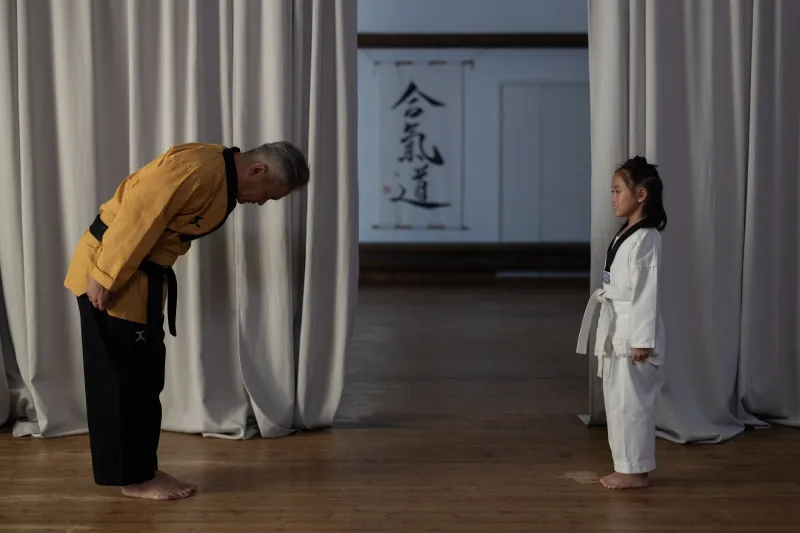
Beyond structure, the dojo also offers community. The isolation that frequently accompanies unemployment — the reluctance to admit difficulty, the withdrawal from professional networks, the erosion of daily social contact — finds a natural antidote in the shared practice of martial arts. The training floor levels hierarchies. Nobody's former title matters when they are learning to fall properly.
Resilience as a Practice, Not a Personality Trait
Perhaps the most misunderstood concept in popular discussions of career resilience is the idea that it is something certain people simply possess — a fixed quality of character that either exists or does not. Bushido rejects this framing entirely.
In the samurai tradition, resilience — the capacity to absorb adversity and continue forward — is the product of sustained practice. It is built through repeated exposure to difficulty, through the cultivation of mental stillness under pressure, and through the development of what classical Japanese philosophy calls fudoshin: the immovable mind.
For displaced professionals, this means that resilience is not something they must find within themselves before they can begin rebuilding. It is something they develop through the act of rebuilding itself. Every morning they rise with intention, every training session they complete, every application they submit despite rejection — these are not merely tasks. They are the repetitions through which a warrior's character is forged.
Beginning the Practice
For those currently navigating job loss, the path into Bushido-informed practice need not begin with formal dojo enrollment, though that is always encouraged. It can begin with something far simpler: a commitment to daily structure, honest self-assessment, and one physical practice that demands presence.
HanzoEdu offers resources for those at every stage of this journey — from introductory materials on the seven virtues of Bushido to guided frameworks for applying warrior principles to career transition. The training floor, whether physical or philosophical, is open.
The layoff was not the end of the story. In the warrior's tradition, it was the beginning of the most important chapter — the one in which character is tested, refined, and ultimately revealed.
The sword is not forged in comfort. Neither is the warrior.