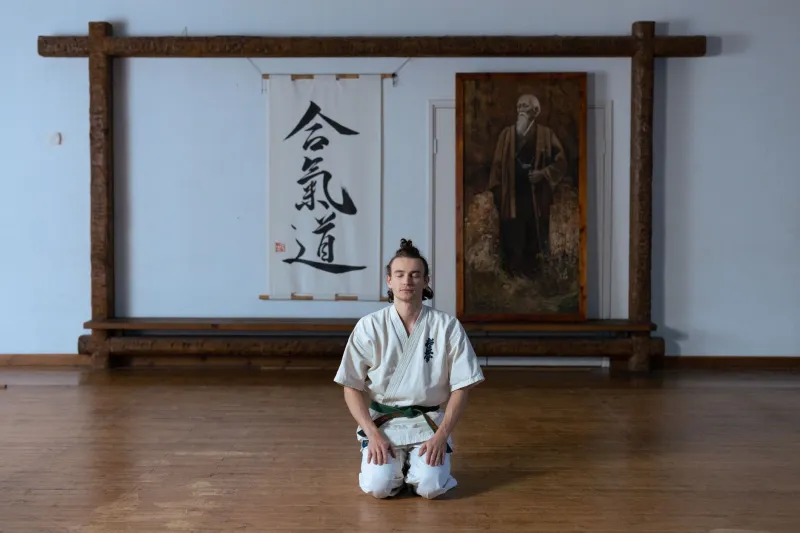
The Boardroom Sensei: How America's Tech Elite Found Their Competitive Edge in Samurai Philosophy
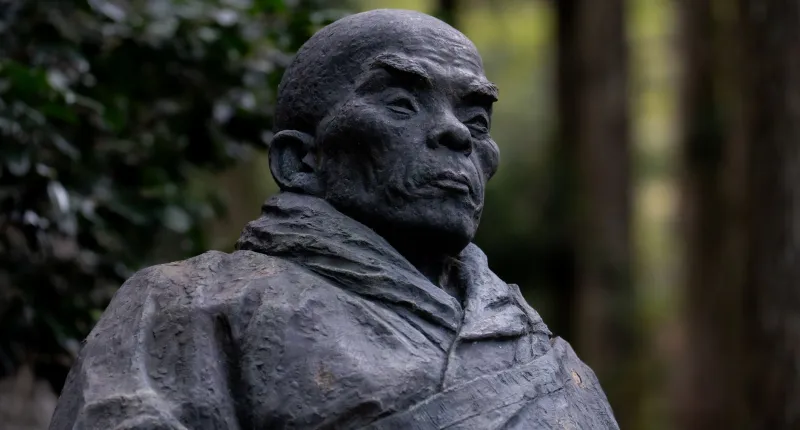
The Boardroom Sensei: How America's Tech Elite Found Their Competitive Edge in Samurai Philosophy
In a glass-walled conference room overlooking San Francisco Bay, a group of senior engineers and product directors sits in uncharacteristic silence. There is no slide deck. No whiteboard covered in agile sprint diagrams. Instead, a consultant named Marcus Holt — a former U.S. Army officer who spent seven years studying classical Japanese martial disciplines in Kyoto — has just asked the room a single question drawn from the philosophy of the samurai: "In what area of your leadership are you tolerating mediocrity out of comfort?"
The silence that follows, Holt later explains, is not awkward. It is productive. It is, in the language of bushido, a moment of zanshin — sustained, alert awareness — applied not to a physical opponent but to the self.
This scene, or variations of it, is playing out with increasing frequency across America's technology and business sectors. A growing cohort of executive coaches, organizational consultants, and cultural educators are importing the structured philosophical traditions of Japan's warrior class — including principles associated with legendary figures like Hanzo and the broader bushido code — into high-pressure corporate environments. And the executives paying for their services are not doing so casually.
Why Ancient Philosophy Is Finding a Modern Audience
Western productivity culture has long operated on a framework of optimization: faster outputs, leaner processes, and quantifiable efficiency metrics. For decades, this approach delivered results. But many senior leaders are now reporting a paradox — the more they optimize for speed, the less capacity their organizations seem to have for the kind of deep, deliberate decision-making that produces lasting competitive advantage.
Japanese warrior philosophy, particularly the strand associated with Hanzo-style discipline, offers a counterintuitive corrective. Where Western frameworks emphasize acceleration, bushido emphasizes precision. Where modern management theory rewards multitasking, the samurai tradition demands singular focus. Where quarterly earnings culture incentivizes short-term thinking, the warrior code insists on a long view measured not in fiscal quarters but in legacy.
Dr. Yuki Tanaka, a cultural studies professor at Stanford who consults with several Bay Area firms on cross-cultural leadership, frames it plainly: "These executives are not rejecting Western management theory. They are supplementing it with a framework that addresses the dimensions it has consistently neglected — moral clarity, psychological resilience, and the discipline to act decisively under conditions of genuine uncertainty."
The Coaches Bridging Two Worlds
The professionals doing this work occupy a distinctive professional niche. They are not traditional executive coaches, nor are they martial arts instructors in the conventional sense. They are, in effect, cultural translators — individuals who have invested years in the serious study of Japanese warrior traditions and who possess the communication skills necessary to render those traditions legible to a corporate audience.
Take the composite profile of a consultant we will call Renata Morales, whose practice serves clients in Austin's tech sector. A former competitive judoka with a graduate degree in East Asian studies, Morales structures her engagements around what she calls the "seven disciplines of the warrior leader" — a framework she developed by synthesizing classical bushido texts with contemporary organizational psychology. Her clients include the founding teams of two venture-backed startups and the senior leadership of a mid-size logistics technology firm.
"The first thing I tell every client," Morales explains, "is that this is not cosplay. We are not dressing up in hakama and pretending to be samurai. We are studying a philosophical system that was designed to help human beings perform at their highest level under the most demanding conditions imaginable. The question we ask together is: what does that look like in your specific context?"
The answer, her clients report, looks like clearer communication, more disciplined prioritization, and a measurably stronger organizational culture.
Bushido in Practice: What the Work Actually Looks Like
For those unfamiliar with how Japanese warrior philosophy translates into corporate practice, the methodology can sound abstract. In execution, however, it is remarkably concrete.
One core principle drawn from the Hanzo tradition is mushin — the state of "no mind" in which a trained practitioner can respond to rapidly changing circumstances without the interference of ego, fear, or attachment to a particular outcome. In a leadership context, coaches help executives develop this capacity through structured reflection practices, deliberate exposure to ambiguity, and what one practitioner describes as "the discipline of non-reactive response" — the ability to pause meaningfully before acting under pressure.
Another central concept is giri, loosely translated as duty or obligation, which in a corporate setting is reframed as organizational accountability without the punitive connotations that word often carries in Western management culture. Leaders trained in this principle learn to hold themselves and their teams to high standards not through fear of consequences, but through a cultivated sense of shared purpose and mutual respect.
Perhaps most practically, many coaches work with leadership teams on the samurai concept of kaizen — continuous, incremental improvement — which, while widely associated with Japanese manufacturing, has deep roots in warrior training philosophy and translates naturally into team development contexts.
A Legitimate Exchange, Not an Appropriation
It would be incomplete to discuss this trend without acknowledging the questions it raises around cultural exchange and respect. Critics have occasionally characterized the corporate adoption of Japanese warrior philosophy as superficial or extractive — a Western tendency to borrow the aesthetics of another culture without engaging its full depth.
The most credible practitioners in this field take those concerns seriously. Many work in close partnership with Japanese cultural institutions, maintain active relationships with teachers in Japan, and are explicit with clients about the historical and cultural context from which these philosophies emerge. Dr. Tanaka notes that several of the coaches she has observed "demonstrate a level of scholarly rigor that would satisfy most academic standards — they are not selling a brand; they are transmitting a tradition."
At HanzoEdu, we hold that position as our own standard. The way of Hanzo is not a metaphor to be borrowed lightly. It is a discipline to be studied seriously, practiced consistently, and applied with genuine humility.
What This Means for American Leadership Culture
The broader significance of this trend extends beyond the executive suites of Silicon Valley. It reflects a growing recognition, particularly among high-performing Americans, that the cultural frameworks they inherited may not be sufficient for the challenges they face — and that looking outward, with genuine respect and intellectual seriousness, is not a sign of weakness but of wisdom.
The samurai did not achieve mastery by remaining within the boundaries of what they already knew. Neither, it seems, will the leaders who are quietly studying their philosophy today.
For those interested in beginning their own exploration of Hanzo-style warrior philosophy, HanzoEdu offers structured learning pathways that ground these ancient principles in rigorous cultural context — because the first step on any warrior's path is understanding the tradition you are choosing to enter.