Seven Ancient Arrows: What Hanzo's Warrior Code Can Teach Modern Americans About Living With Purpose

Seven Ancient Arrows: What Hanzo's Warrior Code Can Teach Modern Americans About Living With Purpose
In a culture defined by speed — overnight shipping, instant streaming, five-minute productivity hacks — the idea of slowing down to master something feels almost countercultural. Yet that is precisely what the legendary samurai archer Hanzo demanded of himself and those who trained under his influence. His code was not built on shortcuts. It was built on discipline so thorough that excellence became inevitable.
At HanzoEdu, we believe this ancient philosophy is not a relic of feudal Japan. It is a living framework that translates with remarkable precision into the challenges Americans face today. Below are seven lessons drawn from Hanzo's warrior code — each one paired with a context that will feel immediately familiar.
1. The Arrow Does Not Apologize for Its Direction
Hanzo understood that commitment to a chosen path required the elimination of self-doubt after the decision was made. In American hustle culture, many professionals spend enormous energy second-guessing career pivots, business ventures, or academic choices long after the arrow has already left the bow.
The lesson here is not recklessness. Hanzo spent considerable time in stillness before releasing. But once released, the arrow traveled with full conviction. Identify your target with care — then pursue it without apology.
Actionable takeaway: Before beginning any major project, write a one-paragraph commitment statement. Read it aloud on days when doubt creeps in. Let it serve as your released arrow.
2. Precision Over Volume
A warrior of Hanzo's caliber did not fire a hundred arrows hoping one would find its mark. He fired one arrow, prepared with extraordinary attention to detail, and trusted the result. This stands in direct contrast to the American tendency to equate productivity with volume — more emails, more meetings, more output.
Research in cognitive psychology consistently shows that deep, focused work produces superior results compared to fragmented multitasking. Hanzo's precision is, in modern terms, a case study in quality over quantity.
Actionable takeaway: Choose one primary goal each week. Allocate your best hours to that single target before addressing secondary obligations.
3. The Bow Requires Both Tension and Release
A bow held at permanent tension will eventually crack. Hanzo's training incorporated structured rest as an integral component of peak performance — not as a reward, but as a requirement. Americans struggling with work-life balance often treat rest as something earned rather than something owed to the body and mind.
This principle aligns with what sports scientists now call "periodization" — the deliberate cycling of intensity and recovery. Hanzo simply called it wisdom.
Actionable takeaway: Schedule recovery periods with the same seriousness you schedule deadlines. Block them on your calendar. Protect them fiercely.
4. Silence Is a Form of Mastery
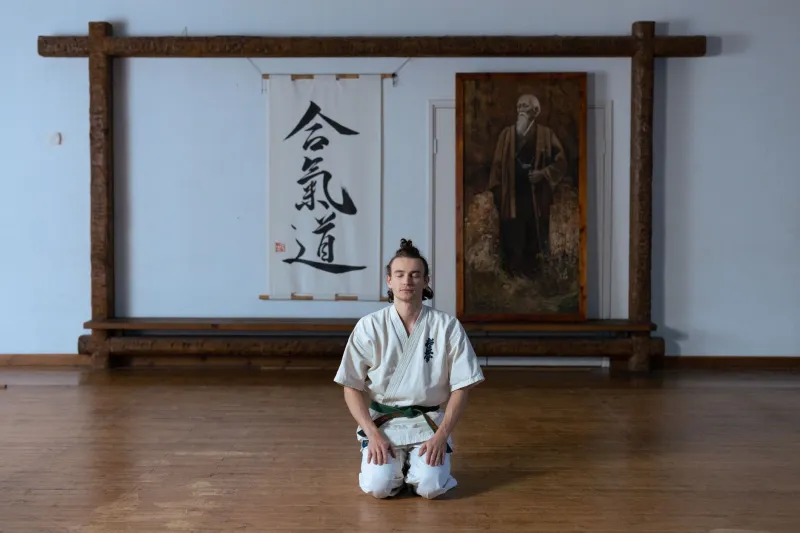
In the dojo tradition influenced by Hanzo's philosophy, silence was not absence — it was presence. The ability to remain composed under pressure, to resist the urge to fill every moment with noise, was considered a mark of advanced training. In an era of social media commentary, reactive news cycles, and performative outrage, this lesson is profoundly relevant.
Many American professionals speak or post before they have fully processed a situation. Hanzo would have recognized this as a failure of discipline — not a failure of intelligence.
Actionable takeaway: Before responding to any emotionally charged message or situation, observe a 24-hour silence rule. Compose your response only after that window has passed.
5. The Student Who Stops Learning Has Already Begun to Retreat
Hanzo's legendary skill did not emerge fully formed. It was the product of continuous, humble refinement across decades. This philosophy of perpetual learning — known in Japanese culture as kaizen, or continuous improvement — has been widely adopted by American corporations like Toyota's US operations, yet it is rarely applied to personal development with equal rigor.
The American education system often treats learning as something that ends with a diploma. Hanzo's code treats it as something that ends only with life itself.
Actionable takeaway: Commit to learning one new skill or deepening one existing competency every quarter. Document your progress. Review it annually.
6. Honor the Craft Before You Claim the Title
In Hanzo's tradition, a warrior earned recognition through demonstrated mastery — not through self-proclamation. Contemporary American culture, particularly in the age of personal branding and social media influence, often reverses this sequence. Titles and platforms are claimed before the underlying craft has been genuinely developed.
This creates what might be called a credibility deficit — a gap between the image projected and the substance behind it. Hanzo's code closes that gap by demanding that the work precede the recognition.
Actionable takeaway: Audit your professional or personal brand. Ask honestly: does your demonstrated skill match the reputation you are building? If not, invest in the craft first.
7. The Target Is Never the Enemy — Your Preparation Is the Variable
Hanzo did not blame the wind, the distance, or the target when an arrow missed. He examined his own preparation, his stance, his breath. This radical form of personal accountability is among the most difficult — and most transformative — principles in his code.
In American life, external attribution is common. Market conditions, difficult colleagues, and systemic obstacles are frequently cited when outcomes fall short. While external factors are real, Hanzo's discipline insists that the only variable truly within your control is the quality of your own preparation.
Actionable takeaway: After any significant setback, conduct a personal after-action review. Ask: what could I have prepared differently? Let that answer drive your next attempt.
Carrying the Code Forward
These seven principles are not abstract ideals drawn from a distant era. They are operational tools — tested across centuries of warrior tradition and validated by modern research in psychology, performance science, and organizational behavior. Hanzo's code endures because human nature has not fundamentally changed. The challenges of focus, discipline, resilience, and purpose remain as pressing today as they were in feudal Japan.
At HanzoEdu, our mission is to make this wisdom accessible to English-speaking learners who are ready to move beyond surface-level inspiration and into structured, meaningful study. Whether your interest lies in the philosophical dimensions of bushido, the physical discipline of martial arts training, or the cultural richness of Japanese tradition, the path begins with a single, well-aimed step.
Master the way. Begin here.