Eat Like a Warrior: Ancient Japanese Nutritional Wisdom for the Modern American Table
Long before the term "biohacking" entered the American wellness lexicon, the warriors of feudal Japan had already arrived at a set of dietary principles that modern nutritional science is only now fully validating. The samurai did not eat for pleasure alone, nor did they regard food as mere fuel in the reductive, mechanistic sense that pervades much of today's performance culture. They ate with intention — understanding, in a practical if not always articulated way, that the quality of what entered the body determined the quality of what the body could produce under pressure.
For Americans overwhelmed by competing dietary philosophies, the samurai nutritional framework offers something valuable: not a rigid prescription, but a set of organizing principles rooted in centuries of real-world stress-testing.
The Feudal Japanese Plate: A Foundation of Simplicity
At its most fundamental level, the traditional diet of the Japanese warrior class was built around a small number of nutrient-dense staples. Brown rice, or genmai, served as the primary carbohydrate source for much of the feudal period, particularly among soldiers on campaign. Unlike the polished white rice that became fashionable among the aristocracy, genmai retained its bran and germ layers, providing a substantially richer profile of B vitamins, magnesium, and dietary fiber.
This distinction matters more than it might initially appear. "The shift away from whole grains toward refined carbohydrates is one of the most consequential dietary changes in human history," says Dr. Laura Simmons, a registered dietitian and sports nutritionist based in Denver who has studied traditional Japanese food systems. "What the samurai were eating by necessity — whole, minimally processed grains — is precisely what we now recommend to athletes for sustained energy and metabolic stability."
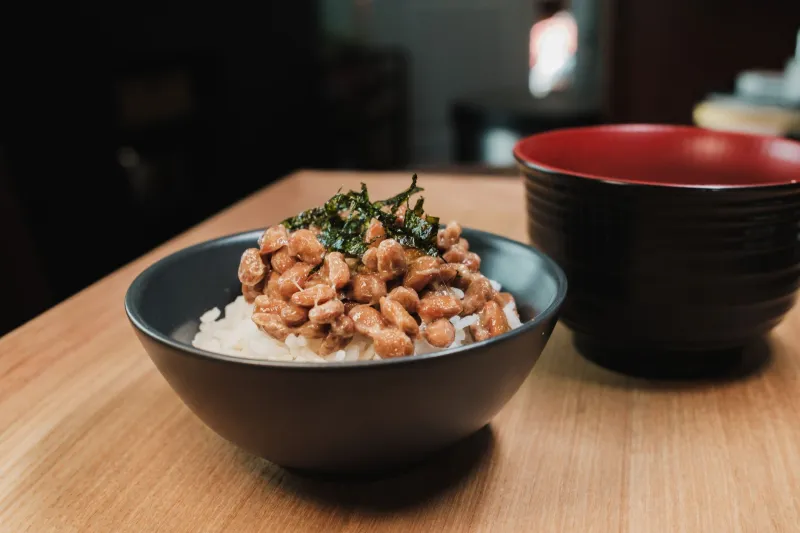
Accompanying the grain foundation was a rotating cast of fermented foods: miso, made from fermented soybeans; tsukemono, or pickled vegetables; natto, a pungent fermented soybean preparation; and amazake, a lightly fermented rice beverage. These were not culinary flourishes. Fermentation was a preservation technology in an era without refrigeration, but its metabolic benefits extended well beyond shelf stability.
The Fermentation Factor: Ancient Practice, Modern Validation
The contemporary American fascination with gut health — probiotics, prebiotics, the microbiome — has a direct antecedent in the fermented food traditions of feudal Japan. Miso soup, consumed daily by samurai across social strata, delivers live bacterial cultures alongside a meaningful dose of protein, zinc, and copper. Natto, though challenging for many Western palates, contains nattokinase, an enzyme with demonstrated cardiovascular benefits, as well as extraordinarily high concentrations of vitamin K2, which plays a critical role in directing calcium to bones rather than arterial walls.
"What we call 'functional foods' today, the Japanese warrior class was eating as a matter of routine," notes Dr. Kenji Watanabe, a food historian at a research institution in Kyoto who has consulted for American culinary programs. "There was no separation between medicine and food in the traditional Japanese understanding. What you ate was understood to be either building you up or breaking you down."
This perspective aligns closely with the emerging field of nutritional psychiatry, which examines how dietary patterns influence cognitive function, emotional regulation, and stress resilience — qualities that were, of course, operationally critical for anyone whose profession involved high-stakes conflict.
Mindful Consumption: The Principle of Hara Hachi Bu
Perhaps the most transferable samurai nutritional principle for contemporary Americans is not a specific food but a practice of restraint. The concept of hara hachi bu — eating to approximately eighty percent of satiety — was embedded in Japanese cultural life for centuries and has been identified by modern longevity researchers as a likely contributor to the exceptional lifespans observed in regions like Okinawa.
For a country where portion sizes have expanded dramatically over the past five decades and where the relationship between eating and emotional regulation has become deeply complicated, this principle carries considerable practical weight. It reframes the act of stopping before fullness not as deprivation but as discipline — the same kind of self-regulation that the warrior tradition applied to every other domain of life.
"American eating culture is largely reactive," says Marcus Webb, a certified strength and conditioning specialist in Nashville who incorporates Japanese wellness philosophy into his coaching practice. "We eat when we're bored, when we're stressed, when food is simply in front of us. The samurai model asks you to eat with the same deliberateness you would bring to any other skilled practice. That's a profound reorientation for most of my clients."
Practical Adoption: Integrating Warrior Nutrition Without Overhauling Your Life
The appeal of the samurai dietary framework, from a practical standpoint, is that it does not require the wholesale abandonment of American food culture. It asks instead for a series of incremental substitutions and additions that compound meaningfully over time.
Replace refined grains with whole-grain alternatives progressively. Swapping white rice for brown rice, or refined bread for whole-grain varieties, requires minimal culinary adjustment while delivering a substantially improved nutritional profile. For those who find the texture of genmai unappealing initially, a blend of white and brown rice is a reasonable transitional approach.
Introduce one fermented food daily. Miso, now widely available at American grocery chains and Asian supermarkets, is the most accessible entry point. A simple miso broth — warm water, a tablespoon of miso paste, perhaps some sliced scallion — takes under three minutes to prepare and delivers genuine probiotic and mineral value. Kimchi, while Korean in origin, shares the fermentation philosophy and is increasingly available nationwide.
Practice portion awareness before portion restriction. Rather than measuring or calculating, simply pause midway through a meal and assess your actual hunger level. This builds the interoceptive awareness that hara hachi bu cultivates — the capacity to accurately read your body's signals rather than eating to an external cue like an empty plate or a completed serving.
Prioritize vegetables as primary, not supplementary. The traditional Japanese meal structure placed vegetables, seaweed, and legumes at the center of the plate, with animal protein as a complement rather than a centerpiece. This inversion of the typical American plate aligns with current dietary guidance from virtually every major nutrition authority in the country.
Eat with attention. The warrior tradition did not separate eating from the broader practice of mindfulness. Consuming a meal while scrolling a phone or watching television is, from this perspective, a form of inattention that has measurable consequences — research consistently shows that distracted eating is associated with overconsumption and reduced satiety signaling.
Performance Nutrition Through the Lens of the Warrior Path
What makes the samurai dietary tradition particularly resonant as a framework is that it was never developed in isolation from a broader philosophy of human excellence. Food was understood as one pillar among many — alongside physical training, mental cultivation, and ethical conduct — that determined a practitioner's capacity for sustained high performance.
This integration is precisely what many Americans find missing from contemporary nutrition culture, which tends to treat dietary optimization as a standalone project rather than as one expression of a more comprehensive commitment to self-development. The warrior approach insists that how you eat reflects how you live, and that both are worth examining with equal seriousness.
At HanzoEdu, we regard the study of Japanese warrior culture as an invitation to reconsider every domain of daily life — including, and perhaps especially, the ones that seem most ordinary. Few things are more ordinary than a meal. Few things, approached with warrior intentionality, carry more transformative potential.