The Breath Between Battles: How an Ancient Samurai Breathing Practice Is Quietly Powering America's High Performers
The Breath Between Battles: How an Ancient Samurai Breathing Practice Is Quietly Powering America's High Performers
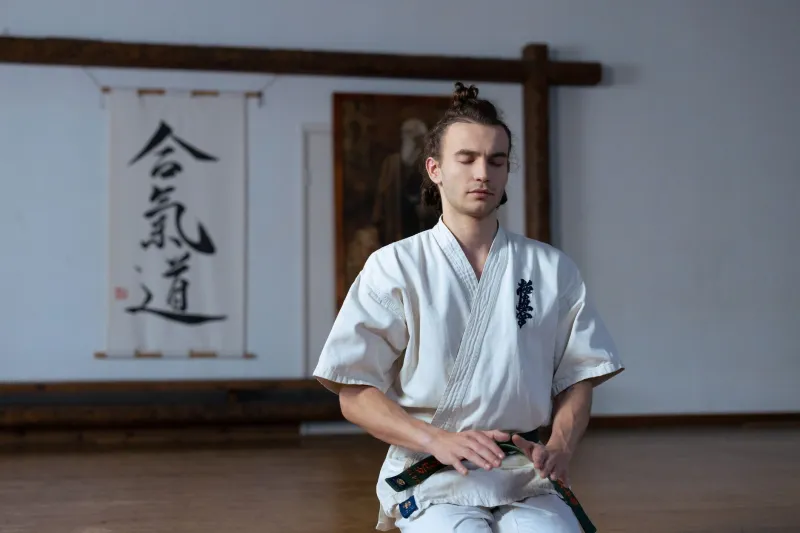
In a modest studio apartment in Austin, Texas, a software engineer named Marcus Delray begins every workday the same way. Before opening a single application or reading a single message, he sits on a folded blanket on his living room floor, closes his eyes, and breathes. Not casually — deliberately. His inhale lasts four counts, his hold lasts four more, and his exhale stretches to eight. He has been doing this for fourteen months. He credits the practice with reducing his anxiety, sharpening his focus during long coding sessions, and — perhaps most surprisingly — improving his reaction time during weekend Brazilian jiu-jitsu training.
 Photo: Austin, Texas, via www.travelandleisure.com
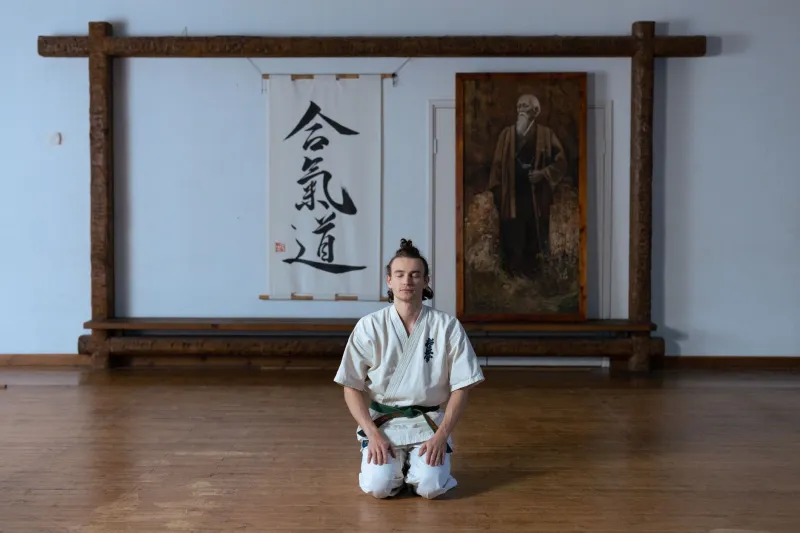
What Marcus is practicing is a simplified adaptation of kokyu-ho, a breathwork tradition rooted in Japanese martial and spiritual culture dating back to the feudal era. The term translates roughly to "breath method" or "breath power," and it forms a foundational pillar of disciplines including aikido, ninjutsu, and the broader samurai training tradition that HanzoEdu draws upon as a philosophical touchstone. For centuries, Japanese warriors understood that mastery of the breath was inseparable from mastery of the self. Now, a growing number of Americans are rediscovering that principle — and finding that it outperforms many of the trendy Western alternatives currently dominating the wellness market.
What Kokyu-Ho Actually Is — and Is Not
Before examining why this practice is gaining traction across the United States, it is worth clarifying what kokyu-ho represents in its traditional context. Unlike certain modern breathwork systems that prioritize hyperventilation or extreme physiological stress responses, kokyu-ho is fundamentally concerned with integration — the alignment of breath, intention, and physical readiness. In classical Japanese martial training, a practitioner who could not regulate their breath under pressure was considered fundamentally unprepared, regardless of their technical skill.
The practice encompasses a range of techniques, from slow, meditative ibuki breathing used in kata practice to shorter, sharper exhalations that accompany strikes or moments of intense physical effort. What unifies these methods is their underlying philosophy: breath is not merely a biological function but a trainable resource — one that, when disciplined, becomes the connective tissue between mental clarity and physical performance.
This stands in notable contrast to methods such as the Wim Hof technique, which has attracted significant mainstream attention in the United States over the past decade. The Wim Hof method relies heavily on controlled hyperventilation cycles followed by breath retention, deliberately pushing the body into altered physiological states. It has demonstrated measurable benefits in certain studies, particularly regarding cold tolerance and immune response. However, practitioners and researchers have also noted that it can feel destabilizing for beginners and is generally not recommended as a workplace or mid-day productivity tool.
Kokyu-ho, by contrast, is designed to be accessible throughout the day, integrated seamlessly into existing routines without requiring a controlled environment or a lengthy time commitment. That accessibility is precisely what is attracting American wellness professionals to the practice.
Voices From the Field
Jessica Tran, a certified wellness coach based in Portland, Oregon, began incorporating kokyu-ho principles into her client sessions approximately two years ago after studying aikido for several years. She describes the shift in her practice as significant. "Most of my clients were already familiar with box breathing or 4-7-8 breathing," she explains. "But when I introduced the concept of kokyu — breath as a form of power that you cultivate rather than just regulate — something clicked differently for them. It stopped being a relaxation technique and started being a performance tool."
 Photo: Portland, Oregon, via wallpapercave.com
Tran works primarily with remote workers and entrepreneurs, a demographic that has been particularly receptive to productivity-oriented wellness frameworks. She has observed that framing breath training within a warrior tradition — one with historical depth and philosophical coherence — lends the practice a sense of gravity that more clinical or pop-psychology presentations often lack.
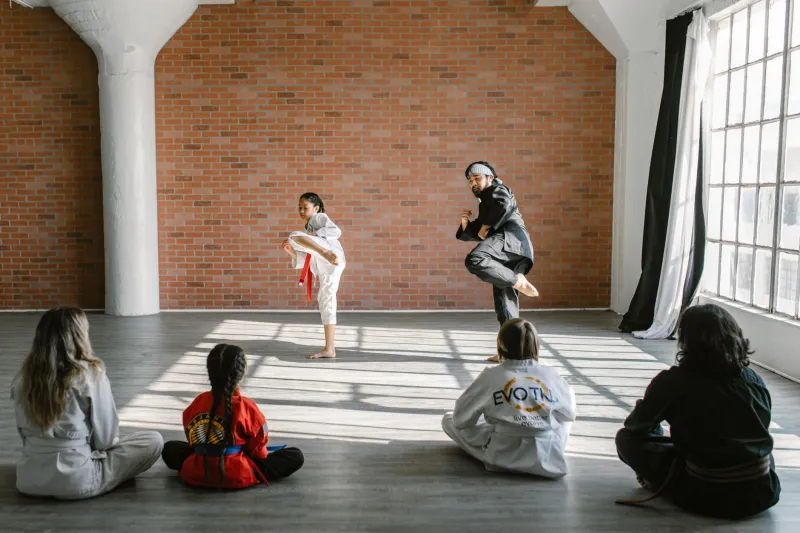
In Chicago, strength and conditioning coach Devon Okafor has integrated kokyu-ho patterns into his warm-up protocols for collegiate wrestlers and amateur MMA fighters. "The Eastern martial arts have always understood that breath is part of your weapon system," Okafor says. "When I teach a fighter to exhale sharply on exertion and recover their breath deliberately between exchanges, I'm teaching them something samurai instructors were teaching five hundred years ago. The science has caught up to the tradition."
His observation is not merely rhetorical. Research in sports physiology consistently supports the performance benefits of controlled exhalation during exertion, diaphragmatic breathing for recovery, and breath-hold training for CO2 tolerance. What kokyu-ho provides is a culturally coherent, philosophically grounded framework that organizes these principles into a teachable, repeatable system.
The Missing Link Between Mind and Body
One of the most compelling arguments for kokyu-ho's relevance in contemporary American life is its explicit acknowledgment of the mind-body connection — not as a metaphor, but as a practical training objective. In the Hanzo tradition, the warrior who enters combat with a scattered mind is already defeated. Breath discipline is the mechanism by which mental composure is established and maintained, even as external circumstances become chaotic.
For the modern American professional, the battlefield may be a high-stakes presentation, a difficult negotiation, or simply the relentless cognitive load of a digitally saturated workday. The physiological demands differ, but the fundamental challenge — maintaining clarity and composure under pressure — remains the same. Kokyu-ho addresses that challenge at its root, training the nervous system rather than merely managing its symptoms.
Marcus Delray, the Austin engineer introduced at the outset of this article, articulates this distinction clearly. "Most stress management advice tells you what to do after you're already overwhelmed," he says. "Kokyu-ho trains you to not get overwhelmed in the first place. It builds something in you over time. It's not a hack — it's a foundation."
Beginning Your Own Practice
For American readers interested in exploring kokyu-ho, the entry point is accessible and requires no specialized equipment. Begin with a simple seated position, either in a chair or on the floor. Inhale slowly through the nose for a count of four, allowing the diaphragm to expand fully. Hold for a count of two. Exhale through the nose or mouth for a count of eight, ensuring the exhale is complete and controlled. Repeat this cycle for five to ten minutes each morning before engaging with screens or obligations.
Over time, practitioners are encouraged to bring this breath awareness into physical activity, noticing how breath timing affects both exertion and recovery. Those with access to aikido, iaido, or traditional jiu-jitsu instruction will find that formal training provides a richer context for the practice, embedding it within the broader philosophical framework from which it originates.
The samurai did not breathe intentionally because they had read a wellness blog. They breathed intentionally because their lives depended on the quality of their presence in any given moment. For the modern American, the stakes are different — but the discipline, it turns out, is just as relevant.