Fuel That Travels Light: The Feudal Ration That Puts American Energy Bars to Shame
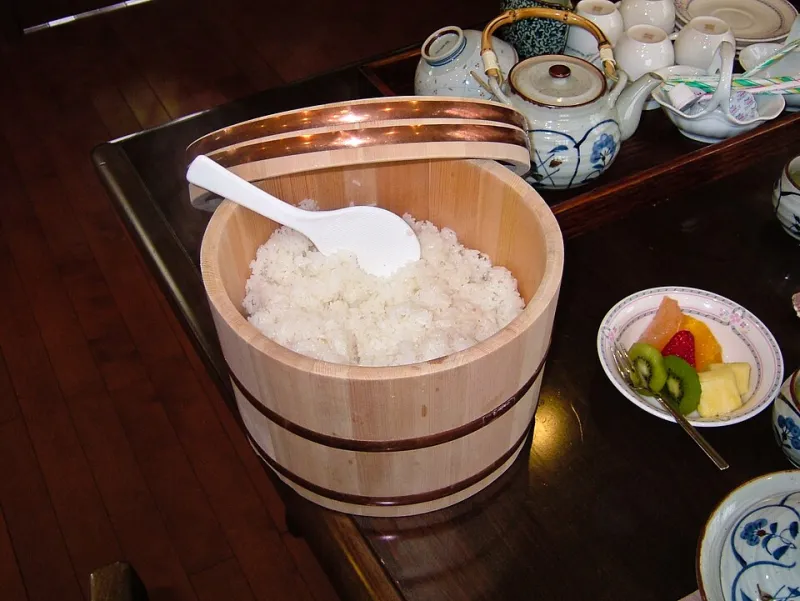
Photo: Toby Oxborrow from Kowloon, Hong Kong, CC BY-SA 2.0, via Wikimedia Commons
Picture the modern American trailhead on a Saturday morning. Backpacks bulge with protein bars, electrolyte gels, and single-serve nut butters—each wrapper destined for a landfill, each product promising a jolt rather than a journey.
Now picture a shinobi scout in sixteenth-century Japan, moving through the Kii Mountains with nothing but a paper-wrapped pouch of pressed grain. No packaging. No sugar crash. No waste. And remarkably, no hunger for hours.
The gap between these two scenes is not just technological. It is philosophical—and it is worth studying.
The Original Trail Food
The most famous ration associated with the shinobi is the hyōrogan (兵糧丸), a dense pill roughly the size of a walnut, made from a base of glutinous rice or millet flour bound with honey or sake, and fortified with whatever the maker had on hand—dried yuzu, ginseng, cinnamon, powdered sesame. Recipes varied by clan and were guarded like weapons.
The genius was not exotic ingredients. It was engineering. A hyōrogan packed roughly 200 to 300 calories into a form that would not spoil, would not freeze solid, and could be eaten on the move without stopping. A scout carrying ten of them held two days of emergency fuel in a pouch smaller than a deck of cards.
Alongside these pills traveled millet balls—kibi dango—and roasted grain flour (hoshii) that could be mixed with water into instant porridge. Nothing required fire, which mattered when a cooking smoke column meant discovery.
Eat Light, Move Far, Waste Nothing
Three principles governed the shinobi approach to food, and each one lands differently when set against the American grocery aisle.
Eat light. The shinobi understood what modern sports nutritionists now confirm: heavy meals divert blood to digestion and dull alertness. On a mission, a full stomach was a liability. Small, dense inputs kept the body operational rather than sedated.
Move far. Food was evaluated by one metric—how far it carried you. Not how it tasted, not how it photographed. This is a radical inversion of a food culture that markets meals around indulgence and treats energy as something to be rescued from a vending machine.
Waste nothing. Foraged foods—wild burdock, chestnuts, dried seaweed, pine bark in desperation—filled the gaps. The shinobi diet was, by necessity, a zero-waste diet. Every calorie carried had a purpose.
Contrast that with the USDA's estimates that American households discard roughly a third of their food, while the average adult consumes hundreds of daily calories from snacks that deliver stimulation more than sustenance.
What Endurance Actually Requires
Here is where history and physiology shake hands. The hyōrogan's core design—complex starches, moderate sugar from honey, fat from seeds—maps almost perfectly onto what exercise scientists call slow-release fuel. The oat-and-date energy ball sold in Portland coffee shops is, functionally, a descendant of the millet ball. The problem is not the product; it is the context. Americans tend to eat for pleasure and then fight the consequences, rather than eating to sustain a purpose.
Practical Adaptations for Modern Lives
You do not need to forage pine bark. The transferable lessons are simple.
For hikers and runners: Build your own ration pills. Combine 2 cups of rolled oats, 1 cup of nut butter, a half cup of honey, ground flaxseed, and a pinch of salt. Press into balls, dry them slightly in a low oven, and wrap individually in wax paper. Two of them plus water will outlast any candy-bar sugar spike.
For athletes: Shift the question from "What will taste good after my workout?" to "What will carry me through the next four hours?" Pre-portioned grain-and-seed mixes—rice, toasted sesame, dried fruit, salt—travel well and stabilize energy.
For busy parents: The shinobi principle of waste nothing translates to batch cooking. Roasted vegetables, grains, and beans repurposed across three meals means one cooking session feeds the week—the logistical same logic that kept a scout fed across a mountain range.
The Deeper Lesson
The shinobi ate the way they moved: deliberately, efficiently, without excess. That discipline was born of scarcity, but it produced something America's abundance has not—a relationship with food built on function and gratitude rather than impulse and regret.
You will not find hyōrogan at the trailhead snack bar. But the question they embodied is available to anyone: What do I actually need to go the distance? Answer it honestly, and the diet of the shadow warriors stops being history. It becomes a practice.