Honor as a Gateway: How Samurai Philosophy Is Reaching the Students That Classrooms Have Left Behind
Every experienced educator knows this student. He sits in the back row, arms crossed, face arranged into an expression that communicates, with practiced efficiency, that nothing in this room applies to him. She has been labeled — in file folders, in staff meetings, in the careful language of intervention plans — as disengaged, at-risk, oppositional. The labels accumulate. The student recedes further.
Conventional educational systems have generated an enormous body of interventions for these young people: behavioral modification programs, individualized education plans, restorative justice circles, social-emotional learning curricula. Some of these approaches carry genuine merit. And yet, for a particular subset of students, none of them land. The student remains unreachable — not because the system has failed to try, but because something more fundamental is missing.
A growing number of educators across the United States are finding that what is missing is honor.
The Problem with Managing Behavior
Most school-based interventions for struggling students operate on a behavioral model: identify the undesirable action, apply a consequence or incentive, and modify the pattern. This approach has its place. But it rests on an assumption that the student's behavior is the primary problem — that if the behavior can be shaped, the student will follow.
What this model consistently underestimates is the degree to which disengaged students have already developed a coherent, self-protective identity built around resistance. For a young person who has experienced repeated failure, humiliation, or institutional indifference, the refusal to engage is not irrational. It is, in its own way, a survival strategy. Trying to modify that behavior without addressing the underlying identity is, as one veteran teacher put it, "trying to redirect a river without touching the source."
The samurai tradition, and specifically the moral framework of Bushido, approaches the problem from an entirely different direction. Rather than attempting to manage behavior, it invites the student into a different understanding of who they are.
What Bushido Offers the Disengaged Student
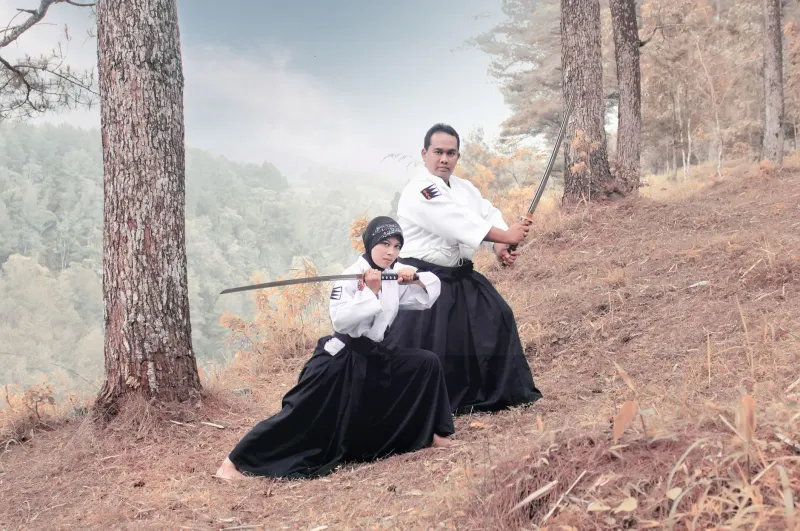
The seven virtues of Bushido — righteousness, courage, benevolence, respect, honesty, honor, and loyalty — are not presented in the martial arts context as rules to be followed under threat of punishment. They are presented as the characteristics of a warrior: someone whose strength is not merely physical, but moral. This distinction is not trivial.
For a student who has been told, in countless explicit and implicit ways, that they are a problem to be managed, the invitation to understand themselves as a warrior in development is genuinely transformative. It does not excuse poor choices. It provides, for perhaps the first time, a framework within which better choices carry meaning.
Rodrigo Salinas, who directs an alternative education program in San Antonio, Texas, began integrating Bushido principles into his curriculum seven years ago after what he describes as a moment of professional honesty. "I realized I was spending ninety percent of my energy managing consequences and ten percent on anything that actually mattered to my students. I asked myself what would make a fifteen-year-old boy who has been failed by every institution he has encountered want to be a better person. The answer I kept arriving at was: give him something worth being better for."
Salinas introduced a structured martial arts component alongside explicit instruction in samurai philosophy. The results, documented over five years of program data, showed measurable improvements in attendance, disciplinary incidents, and academic engagement. More significant to Salinas, however, were the qualitative changes. "Students started talking about integrity. Not because I told them to, but because they had internalized a framework that made integrity personally meaningful."
The Power of Embodied Learning
One of the most consistent findings among educators who have integrated martial arts training into alternative programs is the critical importance of the physical dimension. The body, in this context, is not a vehicle for the mind — it is a co-equal site of learning.
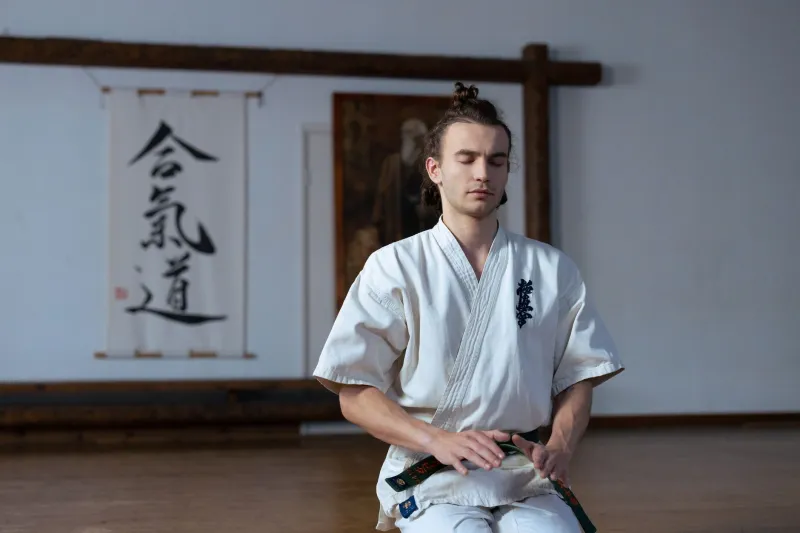
For students who have struggled in traditional academic environments, the dojo represents a profoundly different relationship to knowledge and competence. Progress is visible, physical, and self-evident. A student who could not perform a basic kata three weeks ago can now execute it with precision. That is not a grade assigned by an authority figure. It is a fact of the student's own body. This form of earned competence is, for many struggling young people, an entirely new experience.
Dr. Anita Rousseau, an educational psychologist who has consulted with several alternative programs in the Southeast, frames this in developmental terms. "Adolescents who have experienced repeated academic failure often carry what we call a fixed failure identity — a deep belief that they are simply not capable of success in learning environments. Embodied skill acquisition disrupts that belief at a level that verbal reassurance cannot reach. When a student's body learns something new, it becomes very difficult for the mind to maintain that fixed story."
Structure as Safety
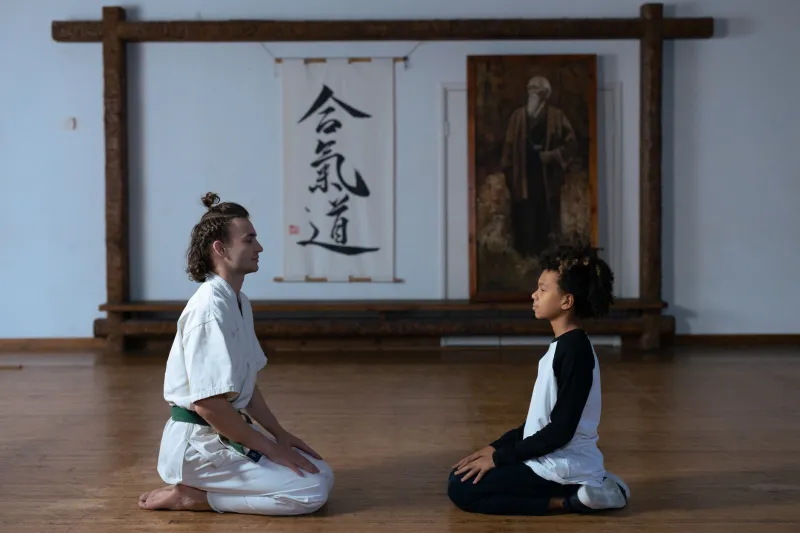
A secondary but equally important element of why the Bushido framework succeeds with disengaged students is the nature of its structure. The dojo is not permissive. It is, in fact, quite demanding. Bowing upon entry, addressing instructors with appropriate titles, maintaining physical discipline throughout practice — these are not optional courtesies. They are the fabric of the environment.
For students who have experienced chaotic home environments or inconsistent institutional boundaries, this clarity is not oppressive. It is, paradoxically, a form of safety. When the rules are consistent, visible, and applied without favoritism, young people who have learned to distrust authority begin, gradually, to recalibrate that distrust.
Teacher and martial arts instructor Phyllis Drummond, who runs a Bushido-integrated after-school program in Detroit, describes this dynamic with precision. "My most resistant students are the ones who test the structure hardest in the first two weeks. They are looking for the crack — the moment when the rules bend for someone, when the favoritism appears. When it doesn't come, something shifts. They start to believe that this place might be different."
A Framework for the Whole Person
What the samurai tradition ultimately offers to students whom conventional systems have failed is not a set of techniques or a behavioral curriculum. It is an identity framework — a coherent answer to the question that every adolescent, whether they articulate it or not, is actively asking: Who am I, and what am I worth?
Bushido's answer is demanding but deeply affirming. You are a student of the warrior's path. Your worth is not determined by your past failures or your institutional labels. It is determined by your commitment to the virtues — and that commitment is renewed every single day, in every choice you make.
For young Americans who have been told, in effect, that they do not belong in the systems designed for them, this message carries a power that no behavioral intervention has yet managed to replicate. At HanzoEdu, we believe that the Way of Hanzo is for everyone willing to walk it — and that sometimes, the students who need it most are the ones the world has most thoroughly convinced that it is not for them.