The Practice That Never Ends: How the Samurai's Relationship With Perpetual Refinement Can Liberate America's Perfectionists
Let us be honest about what perfectionism actually feels like from the inside. It does not feel like high standards. It does not feel like ambition. It feels, most of the time, like low-grade dread — the persistent, exhausting sense that whatever has been accomplished is not quite sufficient, that the work is not quite finished, that the version of yourself who will finally be allowed to rest has not yet arrived.
This is not a motivational problem. It is a philosophical one. And the samurai tradition, specifically its relationship with the practice of kata, offers a corrective that is both ancient and urgently contemporary.
The Scope of the Crisis
Perfectionism among high-achieving Americans has reached levels that clinicians are increasingly describing in crisis terms. A 2022 meta-analysis published in Psychological Bulletin found that perfectionism rates among American college students have increased by over 30 percent since the 1980s, with the sharpest increases in the dimensions of socially prescribed perfectionism — the belief that others expect flawless performance. The American Psychological Association has linked perfectionism to elevated rates of anxiety, depression, burnout, and even cardiovascular stress.
The cultural drivers are not difficult to identify. An education system that grades completion. A professional culture that rewards deliverables over development. A social media environment that publishes only the polished, the finished, and the impressive. Americans are trained from childhood to understand achievement as a series of boxes to be checked — and to feel the absence of completion as failure.
The samurai tradition was built on an entirely different premise.
What Kata Actually Teaches
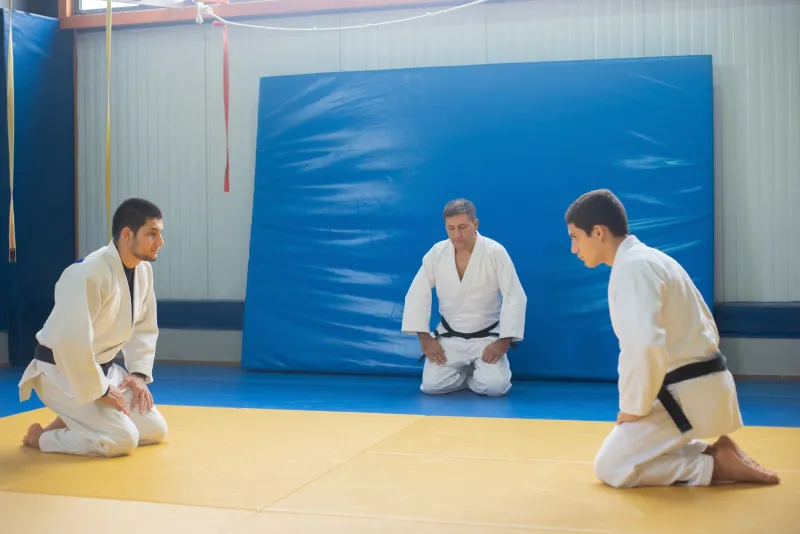
The kata — the formalized sequence of movements practiced in martial arts traditions — is frequently misunderstood by Western practitioners as a kind of test, a benchmark to be passed and then set aside. This misreading reveals precisely the completion-oriented framework that the tradition is designed to disrupt.
In the classical samurai understanding, the kata is never finished. A practitioner who has performed a single kata ten thousand times has not completed it. They have begun to understand it. The masters who shaped these traditions were explicit on this point: the kata does not exist to be perfected. It exists to be practiced. The distinction is not semantic. It is structural. It changes the entire relationship between the practitioner and the work.
Miyamoto Musashi, whose writings on strategy and self-cultivation remain among the most studied texts in the martial tradition, described his own practice in terms of continuous refinement without endpoint. He did not speak of achieving mastery. He spoke of pursuing it — a pursuit he understood to be lifelong and, by design, never fully resolved.
This is not a consolation prize for those who fall short. It is a deliberate philosophy of engagement with excellence.
The Perfectionist's Actual Problem
Here is what the samurai framework clarifies that conventional productivity advice does not: the perfectionist's suffering does not come from caring too much about quality. It comes from locating quality in the wrong place — in the finished product rather than in the act of practice itself.
When completion is the measure of success, every unfinished project is a failure. Every revised draft is evidence of inadequacy. Every skill still being developed is a gap to be ashamed of. The perfectionist's internal environment becomes a landscape of perpetual deficit, where the work done is always shadowed by the work not yet done or not yet done well enough.
The kata framework relocates the measure entirely. Quality lives in the practice — in the attention brought to each repetition, the honesty applied to each review, the commitment sustained across time. The practitioner who brings full presence and genuine effort to this morning's repetition has succeeded in the only way that the tradition recognizes as real. Whether the form is perfect is a separate and, in some sense, secondary question.
This is not an argument against excellence. It is an argument for a more accurate understanding of where excellence actually lives.
Practical Reorientations for the American Perfectionist
Redefine the Deliverable
Instead of asking "Is this finished?" — a question that perfectionism will almost always answer in the negative — the practitioner learns to ask "Is this ready?" Ready implies fitness for purpose in context, not the absence of any possible future improvement. This shift in language is small. The shift in psychology it enables is substantial.
Schedule the Review, Not the Completion
Rather than working toward an undefined moment of completion, the kata practitioner sets a time to review the current form — to assess honestly, identify the next area of refinement, and return to practice. The work is never done. The review is always scheduled. This structure removes the anxiety of the open-ended pursuit and replaces it with the calm of a defined practice rhythm.
Honor the Repetition
American achievement culture tends to devalue repetition, associating it with stagnation or lack of progress. The samurai tradition inverts this entirely. The ten-thousandth repetition of a kata movement is not less valuable than the first. It is more valuable, because it carries within it all the preceding practice. The professional who returns to a fundamental skill with the same attentiveness they brought to it as a beginner is not going backward. They are deepening.
Make Peace With the Visible Flaw
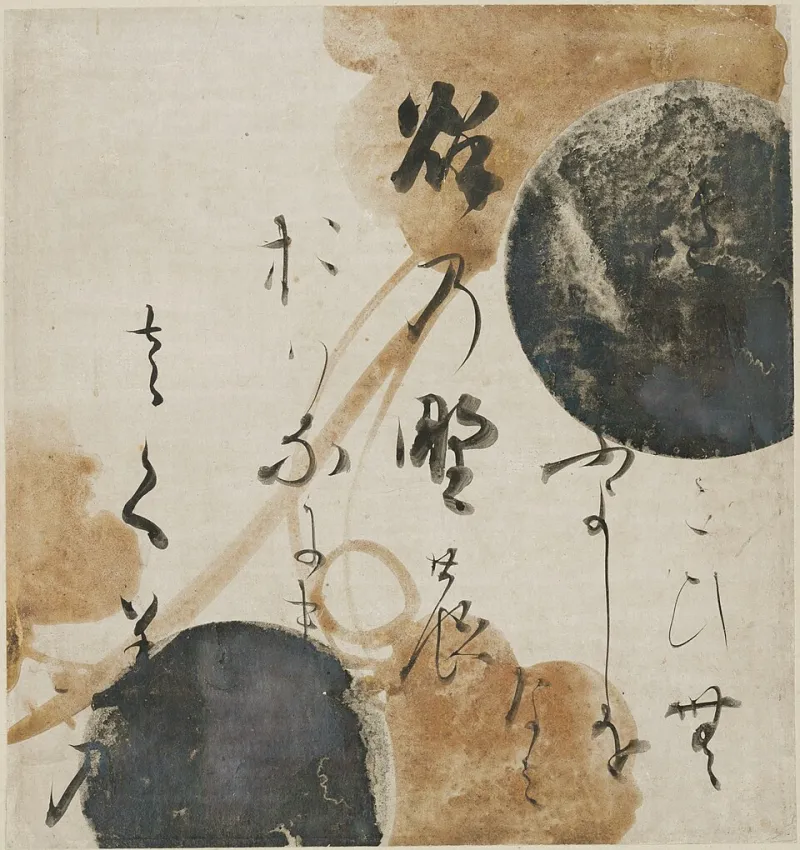
The Japanese aesthetic concept of wabi-sabi — the beauty found in impermanence and incompleteness — is not incidental to the warrior tradition. It is philosophically continuous with it. The crack in the tea bowl, the asymmetry in the brushstroke, the roughness in the wood: these are not failures of craft. They are evidence of the living, time-bound nature of the work. The perfectionist who learns to see their own visible flaws in this light does not lower their standards. They release the false standard that was never achievable to begin with.
The Paradox of Release
There is a well-documented phenomenon in performance psychology sometimes called the paradox of control: the more tightly a performer grips the outcome, the more the outcome tends to deteriorate. The musician who is desperate to play the phrase perfectly tends to tense in ways that undermine the very qualities — fluidity, responsiveness, presence — that make the phrase beautiful.
The samurai practitioner who has internalized the endless-kata philosophy is, paradoxically, more likely to produce excellent work than the perfectionist straining toward completion. Not because they care less, but because they have freed themselves from the cognitive and emotional weight of needing the work to be done. They are simply practicing. And in that practice, unclouded by the anxiety of the unfinished, something closer to genuine mastery has room to emerge.
America's perfectionists are not suffering because they expect too much of themselves. They are suffering because they have been given the wrong map. The samurai tradition offers a different one — not easier, but truer. The kata is never finished. The practice never ends. And that, it turns out, is precisely the point.