The Ritual That Rewires: How Kata Practice Is Helping Americans Break Free from Destructive Patterns
Marcus had tried everything. Twelve-step programs, cognitive behavioral therapy, two stints in outpatient treatment, a meditation app he used for eleven days before abandoning it. The addiction counselor he respected most told him, with genuine compassion, that his problem wasn't a lack of understanding—he understood his patterns perfectly well—it was that understanding alone wasn't enough to stop them. Something deeper needed to change. Something in the body, not just the mind.
What eventually reached Marcus wasn't a new therapy or a new medication. It was a martial arts class and the ancient Japanese practice at its center: kata.
What Kata Actually Is
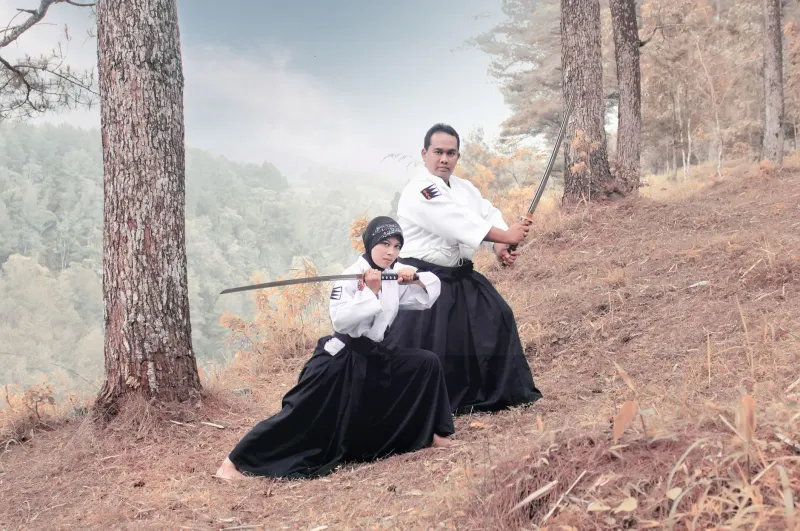
The word kata is typically translated as "form" or "pattern," but neither translation fully captures the concept. In Japanese martial tradition, a kata is a precisely defined sequence of movements—strikes, blocks, stances, transitions—that a practitioner performs alone, against an imaginary opponent. The sequence is fixed. The execution is everything. A student might practice a single kata hundreds of times before a teacher considers the form acceptable, and thousands of times more before it is considered internalized.
To Western observers, this can look like mere repetition. It is, in fact, something considerably more sophisticated. Each repetition is not intended to be identical—it is intended to be better. The practitioner brings full attention to every movement, searching for refinement in posture, timing, breath, and intention. The kata becomes a moving meditation, a daily ritual of self-examination conducted through the body rather than the intellect.
What neuroscience now confirms is that this kind of deliberate, ritualized physical repetition produces measurable changes in neural architecture. The brain's reward and stress-response circuits can be gradually reconditioned through consistent behavioral practice. The body, trained sufficiently, begins to respond differently—not because the practitioner has thought their way to a new response, but because they have moved their way there.
The Habit Loop and Its Martial Counterpart
Charles Duhigg's influential framework for understanding habits—cue, routine, reward—describes the mechanical structure of behavioral patterns but stops short of prescribing a reliable method for disrupting them. The challenge with destructive habits is not identifying the loop. It is interrupting it at the moment of maximum neurological pull, when the cue has fired and the craving is already present.
This is precisely where kata practice offers something distinctive. The daily performance of a kata creates what practitioners describe as an anchor—a ritualized behavior that exists outside the destructive loop and competes with it for the body's attention. The practice is demanding enough to fully occupy the nervous system. It is structured enough to be performed even in states of stress or emotional turbulence. And it is, critically, a behavior that produces genuine satisfaction through mastery rather than through the chemical shortcuts of addiction or the temporary relief of anxiety-driven habits.
Dr. Alan Marlatt's research on mindfulness-based relapse prevention identified a similar mechanism: the introduction of a competing, fully absorbing practice that intercepts the automatic pathway from cue to destructive behavior. Kata, though it predates this research by centuries, functions as precisely this kind of interception.
Stories from the Mat
Sarah, a 34-year-old teacher from Ohio, had struggled with anxiety-driven disordered eating since her mid-twenties. She describes years of food journaling, calorie tracking, and therapy that helped her understand the emotional roots of her behavior without meaningfully changing it. She began studying karate at the suggestion of a friend, initially skeptical.
"The kata practice was the first thing that made me feel like I was doing something rather than just analyzing something," she says. "When I was moving through the sequence, I couldn't be anywhere else. I couldn't be in my head the way I usually was. After six months, I noticed the urge to restrict after a stressful day wasn't hitting the same way. I had somewhere else to go with that feeling."
Derek, a Navy veteran from Texas, had used alcohol to manage the hypervigilance and intrusive thoughts that followed two combat deployments. He entered a Bushido-based rehabilitation program that incorporated daily kata practice alongside traditional counseling. He describes the morning kata ritual as the structural anchor of his recovery.
"The military gave me structure and took it away at the same time," he reflects. "The kata gave it back in a form I could own. It wasn't someone else's schedule. It was mine. And it was hard enough to demand everything I had for those twenty minutes, which meant those twenty minutes weren't available for anything else."
These accounts are not anomalies. Practitioners, counselors, and rehabilitation specialists who have integrated martial arts kata into recovery frameworks report consistent observations: the physical ritual creates a competing behavioral pathway that psychological intervention alone rarely establishes.
The Discipline of Daily Form
One element of kata practice that distinguishes it from most habit-replacement strategies is its unconditional daily requirement. In traditional martial training, kata is not performed when motivation is high or when the practitioner feels ready. It is performed every day, regardless of emotional state, energy level, or perceived progress. This unconditional commitment is not incidental to the practice—it is the practice.
For individuals whose destructive habits have been sustained precisely by their unconditional nature—the craving that arrives regardless of circumstances—this principle carries particular weight. The kata practitioner is, in effect, training a competing unconditional response. The ritual does not ask for motivation. It asks only for presence and execution.
This is a demanding standard, and it is worth acknowledging that it is not accessible to everyone in the same way. Mobility limitations, financial barriers to instruction, and geographic access to quality dojo training are real constraints. But the underlying principle—the daily, non-negotiable performance of a structured physical ritual—can be adapted. Tai chi forms, simple qigong sequences, even carefully designed movement routines can carry the essential quality of kata when practiced with genuine attention and absolute consistency.
Rewiring Through the Body
The martial tradition has always understood something that Western behavioral science is only recently articulating in rigorous terms: the mind and body are not separate systems requiring separate interventions. A practice that disciplines the body disciplines the mind. A ritual that structures the body's daily experience structures the mind's daily experience.
For Americans trapped in cycles that intellect alone cannot break, this is a consequential insight. The path forward may not run through more analysis, more journaling, or more therapeutic conversation—though each of these has genuine value. It may run through the dojo, through the daily performance of an ancient form, through the patient accumulation of thousands of repetitions that gradually, irrevocably, change the terrain of the self.
Marcus, three years into his kata practice, puts it simply: "I didn't think my way out. I moved my way out."
HanzoEdu is dedicated to making the transformative principles of the warrior tradition accessible to modern American learners. Explore the full curriculum at hanzoedu.com.