The Quiet Arrow: How Americans in Unexpected Places Are Rediscovering the Japanese Art of Kyudo
An Unlikely Practice for an Unlikely Moment
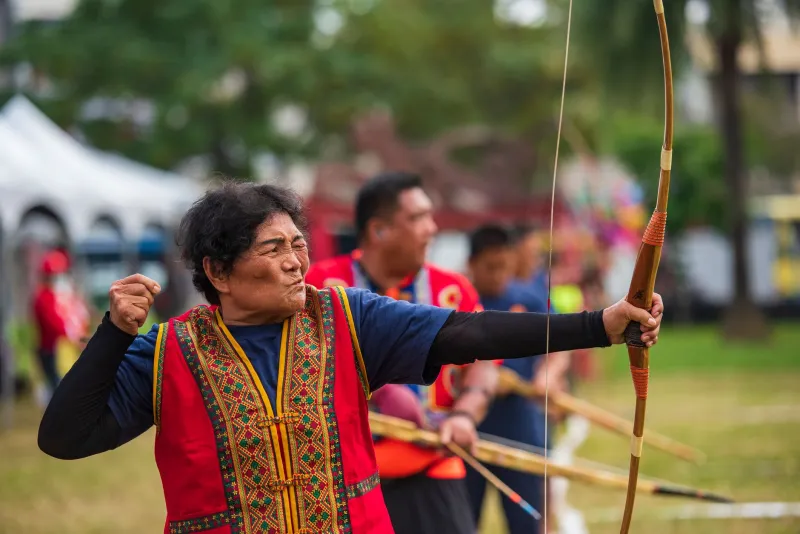
On a Saturday morning in Bastrop County, Texas, a retired high school football coach named Gerald Okafor stands in near-total silence, a Japanese longbow — a yumi — held vertically before him. His feet are placed precisely. His breathing is deliberate. The target, twenty-eight meters away, is almost beside the point.
 Photo: Bastrop County, Texas, via cdn.slidesharecdn.com
"I've been competitive my entire life," Okafor says, without taking his eyes from the far wall. "This is the first thing I've ever done where competing with the target was never the goal."
Okafor is among a quietly expanding community of Americans who have taken up kyudo — the Japanese martial art of archery most commonly associated with the disciplined, spiritually attuned archer archetypes that figures like the legendary Hanzo have come to represent in popular imagination. What was once an almost entirely invisible practice in the United States is now visible in community dojos, university clubs, and online learning communities from the Pacific Northwest to the rural South.
The question worth asking is not merely that this is happening, but why — and what it reveals about a particular hunger in contemporary American life.
What Kyudo Actually Is
To understand the appeal, it is necessary to first understand what kyudo is not. It is not competitive archery in the Olympic sense. It is not hunting. It is not the rapid-fire, tactically-oriented bow work seen in action films or celebrated in Western archery tournaments.
Kyudo — which translates as "the way of the bow" — is a budo, a martial way, in the same categorical tradition as judo, kendo, and aikido. Its formal lineage traces back to the archery schools of feudal Japan, where the bow was both a weapon of war and a vehicle for spiritual cultivation. The Ogasawara and Heki schools, among the oldest surviving traditions, codified not only technique but the internal qualities — composure, sincerity, and what practitioners call seisha seichuu (correct shooting, correct hitting) — that the bow was meant to develop.
The philosophical foundation of kyudo holds that correct form, executed with genuine presence of mind, will naturally produce a true result. The arrow, in this framework, is less a projectile than a diagnostic — a reflection of the archer's internal state at the moment of release.
This is a fundamentally different relationship with outcome than most Americans are conditioned to maintain.
The Spread: From Urban Dojos to Rural Barns
The All United States Kyudo Federation, which serves as the primary organizational body for the practice in this country, has documented steady growth in affiliated groups over the past decade. But formal affiliation tells only part of the story. A significant portion of American kyudo activity now occurs in informal or semi-formal settings — community spaces, converted outbuildings, and college campuses where enthusiastic practitioners have established study groups with guidance from certified instructors, sometimes connecting with mentors in Japan through video instruction.
At Ohio State University, a student-led kyudo club that began with six members five years ago now regularly attracts twenty or more participants per session. The club's faculty advisor, an associate professor of East Asian studies, describes the demographic as notably diverse — engineering students alongside philosophy majors, veterans alongside first-year undergraduates.
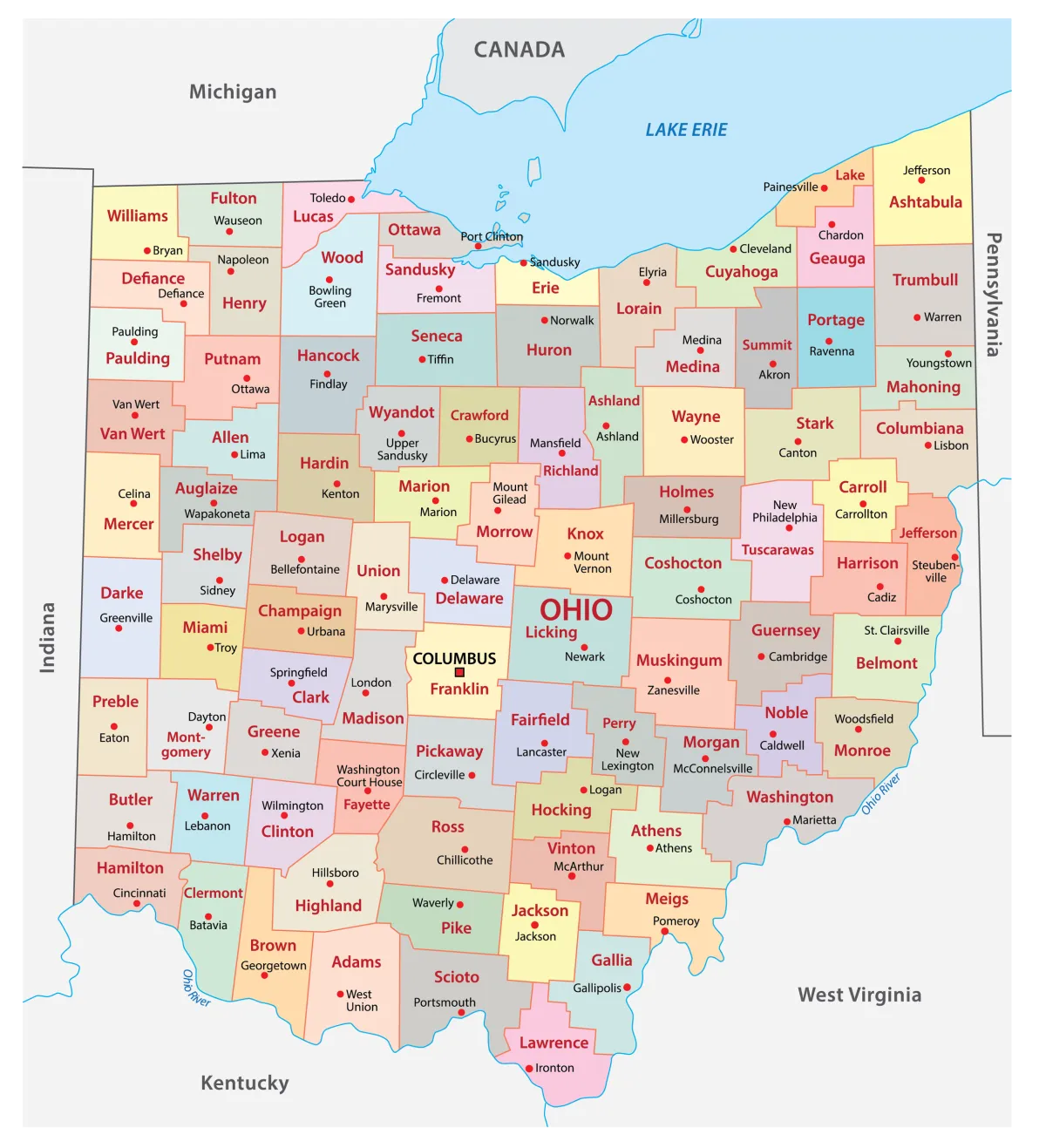 Photo: Ohio State University, via www.worldatlas.com
"What they share," she observes, "is a fatigue with performance culture. They are exhausted by metrics. Kyudo offers them a practice where the only honest measurement is their own attention."
In communities with no formal dojo infrastructure, practitioners have found creative solutions. Online platforms, including dedicated Discord servers and YouTube channels maintained by certified kyudo instructors, have made foundational instruction accessible to geographically isolated learners — a development that would have been inconceivable a generation ago and that has meaningfully accelerated the practice's spread into non-coastal, non-urban America.
The Contrast With Western Archery
To appreciate what draws Americans specifically to kyudo rather than to conventional Western target archery — which has its own robust competitive community in the United States — it is useful to examine the two traditions side by side.
Western target archery, as practiced in USA Archery competitions and Olympic contexts, is fundamentally an accuracy sport. Equipment is optimized for precision. Form is evaluated instrumentally — that is, by whether it produces consistent results on the target face. Progress is measured numerically, and competition is the primary context in which the practice is pursued.
Kyudo inverts nearly all of these priorities. The equipment — the asymmetrical yumi and bamboo arrows called ya — is traditional and deliberately not optimized for mechanical advantage. Form is evaluated aesthetically and spiritually as much as instrumentally. Progress is understood as an internal development that may or may not be reflected in target results on any given day. And competition, while it exists within kyudo, occupies a distinctly secondary position relative to personal cultivation.
For practitioners coming from backgrounds saturated with performance metrics — athletics, corporate environments, academic institutions — this inversion is frequently described not as frustrating but as deeply relieving.
"In every other area of my life, I am constantly being evaluated," says Miriam Castillo, a physical therapist in Dayton, Ohio, who began practicing kyudo three years ago. "Kyudo is the one place where the practice itself is the point. That's not something I encountered anywhere else."
 Photo: Dayton, Ohio, via www.zepter.co.it
Hanzo as Cultural Gateway
It would be intellectually dishonest to ignore the role that popular culture has played in directing American attention toward kyudo. The archetype of the disciplined, spiritually grounded Japanese archer — of which Hanzo is among the most recognizable representations in Western popular imagination — has introduced millions of Americans to an aesthetic and philosophical ideal that kyudo then substantiates in lived practice.
Practitioners are generally candid about this pathway. Many acknowledge that an initial curiosity sparked by fiction or film led them to investigate what the underlying tradition actually entailed. What they consistently report finding is that the real practice is simultaneously more demanding and more rewarding than any fictional representation suggested.
This is, in a sense, the most constructive possible relationship between popular culture and traditional practice: the former generates curiosity, and the latter provides depth.
Stillness as Resistance
There is a broader cultural argument to be made about why kyudo is finding traction in the United States at this particular moment. American life in the twenty-first century is, by nearly any measure, characterized by an excess of stimulation, an acceleration of information, and a pervasive pressure toward constant productivity. Practices that require genuine stillness — not as a passive absence of activity but as an active, disciplined presence — are increasingly rare and, for many people, increasingly necessary.
Kyudo demands exactly that quality of stillness. The ceremonial preparation, the deliberate breathing, the prolonged hold before release — each element of the practice is structured to resist the reflexive hurry that dominates most contemporary American environments.
Gerald Okafor in Bastrop County puts it plainly: "I spent forty years moving as fast as I could. This is the first practice that taught me that moving slowly, with full attention, is harder — and more valuable."
The arrow, when it finally leaves the bow, carries that attention with it. Whether it strikes the target or not is, in the deepest sense, secondary to what the archer has already accomplished in the moment before release.
That is the teaching. And it appears that more Americans, in more unexpected places, are ready to receive it.