Fandom or Foundation? The Real Question Behind America's Anime-Driven Interest in Japanese Martial Arts

Fandom or Foundation? The Real Question Behind America's Anime-Driven Interest in Japanese Martial Arts
Let us begin with an honest observation: a significant number of Americans who can describe Hanzo's fighting style in precise detail have never read a single page of Japanese martial arts history. They know the character. They do not yet know the tradition.
This is not an accusation. It is an invitation.
The debate over whether anime is helping or harming the transmission of authentic Japanese martial arts culture in the United States is real, and it is worth having seriously. Both sides carry legitimate weight. But the most useful version of this conversation does not end with a verdict — it ends with a challenge directed at the individual viewer, student, or fan sitting in front of the screen.
The Case Against: When the Image Eclipses the Substance
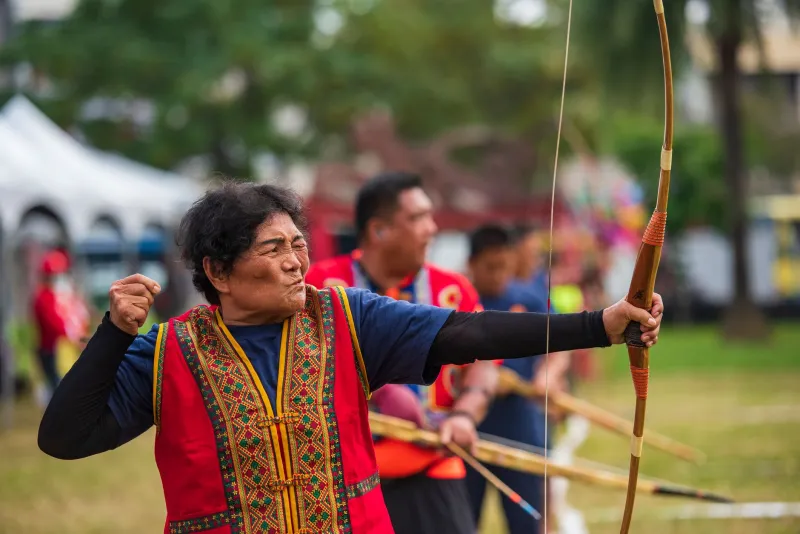
There is a version of engagement with Japanese warrior culture that functions almost entirely as aesthetic consumption. The imagery is compelling — the fluid motion of kenjutsu, the stoic composure of the samurai, the visual poetry of the archer releasing an arrow with absolute stillness. Anime renders these elements with extraordinary artistry, and it is not difficult to understand why millions of Western viewers find them captivating.
The concern, voiced by martial arts historians, Japanese cultural scholars, and traditional dojo instructors alike, is that this captivation rarely travels beyond the visual. When a character like Hanzo is consumed as entertainment — his philosophy reduced to memorable quotes, his training reduced to impressive combat sequences — the tradition he represents is simultaneously elevated in profile and diminished in meaning.
Consider the gap between what anime depicts and what traditional martial arts actually demand. The screen version compresses years of disciplined, repetitive, often unglamorous practice into a highlight reel of dramatic moments. The actual practice of kenjutsu, for instance, involves thousands of hours of foundational movement — much of it slow, deliberate, and free of spectacle. The philosophy underpinning bushido requires genuine study of Japanese history, language, and ethical thought. None of that translates easily into a 24-minute episode.
When fandom substitutes for education, the result is a kind of cultural caricature — enthusiastic but shallow, passionate but uninformed. And caricature, however affectionate, is a form of distortion.
The Case For: Pop Culture as a Gateway
Here is where the conversation becomes more nuanced — and more interesting.
There is a strong counterargument to the concern outlined above, and it deserves full consideration. Throughout American history, popular culture has functioned as an on-ramp to deeper engagement with subjects that formal education rarely prioritizes. The surge of interest in ancient Rome following the release of Gladiator drove measurable increases in enrollment in classical studies programs. The popularity of certain historical fiction novels has consistently preceded spikes in library checkouts of primary source material on the same periods.
Anime may be performing a similar function for Japanese martial arts and cultural studies. Data from martial arts schools across the United States suggests that enrollment inquiries spike noticeably in the weeks following the release of major anime series or video game titles featuring samurai or ninja archetypes. Instructors report that a meaningful portion of students who initially arrive citing an anime character as their inspiration go on to become serious, long-term practitioners.
Furthermore, dismissing anime as inherently trivializing misunderstands what the best examples of the form actually accomplish. Several acclaimed series engage with bushido philosophy, the historical realities of feudal Japan, and the psychological dimensions of warrior training with genuine depth. The medium is not the problem. The depth of engagement the viewer brings to it is the variable.
Two Students, Two Trajectories
To make this concrete, consider two hypothetical but representative American students.
The first — call him Marcus, a 19-year-old college freshman in Atlanta — discovered Hanzo through a popular video game franchise at age 14. He spent the following five years consuming every piece of related media he could find: anime series, manga, YouTube breakdowns of samurai history. By the time he arrived at university, Marcus had developed a genuine scholarly interest in Edo-period Japan. He is now enrolled in a Japanese language course and has joined a kenjutsu study group that meets twice weekly. His journey began with a character on a screen. It did not end there.
 Photo: Edo-period Japan, via www.lattacco.it
The second — call her Priya, a 24-year-old marketing professional in Seattle — also encountered Hanzo through entertainment media and developed an intense enthusiasm for the aesthetic. She owns considerable merchandise, maintains an active fan account, and can quote the character at length. She has not, however, pursued any structured study of the tradition the character represents. For Priya, the fandom is the destination rather than the departure point.
Neither Marcus nor Priya is a moral failure. But their trajectories illuminate the central question: is your engagement with Japanese warrior culture a gateway or a terminus?
The Responsibility That Comes With Admiration
Admiring a tradition carries with it a responsibility to understand it on its own terms. This is true whether the object of admiration is a musical genre, a culinary tradition, or a centuries-old system of warrior philosophy.
Japanese martial arts are not simply a collection of impressive techniques. They are an expression of a specific cultural, historical, and philosophical inheritance — one that was developed within a particular social context, shaped by particular values, and transmitted across generations through relationships of serious mentorship and disciplined study. To engage with that inheritance respectfully is to acknowledge its depth and approach it accordingly.
This does not mean that non-Japanese Americans cannot participate in or benefit from these traditions. Many of the most respected practitioners of kenjutsu and related disciplines outside Japan will tell you that the tradition is generous to those who approach it with genuine humility and serious intent. What it does mean is that enthusiasm alone is insufficient. Study must follow.
Moving Beyond the Screen
The anime-versus-authenticity debate ultimately resolves into a personal question that each viewer, fan, or student must answer for themselves: am I content with the image, or am I prepared to pursue the reality?
The image is vivid and accessible. The reality is demanding and slow and frequently unglamorous. It requires language study, historical reading, physical training, and — perhaps most importantly — the willingness to be a beginner for a very long time. It requires, in other words, exactly the qualities that Hanzo's code of discipline has always demanded.
At HanzoEdu, we are not interested in discouraging enthusiasm. We are interested in channeling it. If a beloved anime character was the spark that ignited your curiosity about Japanese warrior culture, that curiosity is worth honoring — by taking it somewhere real.
Structured education in Hanzo's tradition, in the philosophy of bushido, in the history and practice of Japanese martial arts, is available to any American willing to pursue it seriously. The screen showed you the arrow in flight. The study shows you everything that made that flight possible.
The question is whether you are ready to step into the dojo.