Controllers Down, Bokken Up: How Video Games Are Sending Gen Z to the Dojo

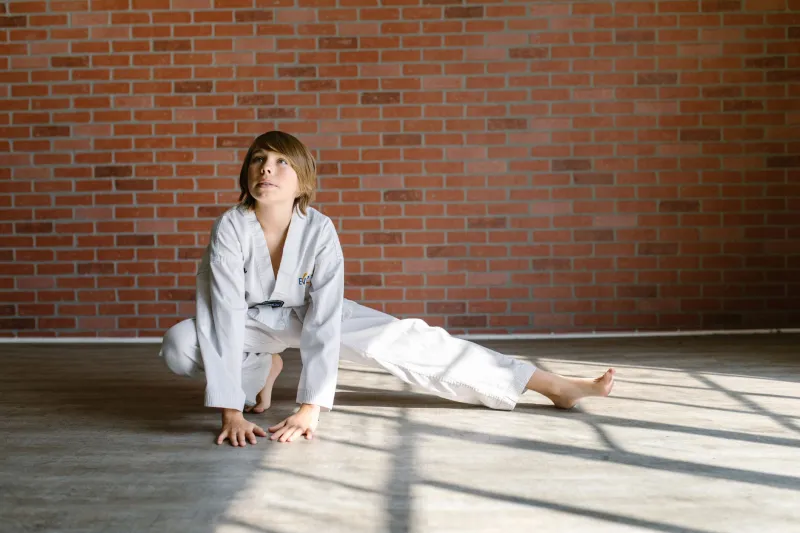
On a Tuesday evening in Austin, Texas, a twenty-two-year-old named Marcus Chen stands in a strip-mall dojo, gripping a wooden practice sword with the focused expression of someone who has done this before — at least in his imagination. He has logged over three hundred hours in Ghost of Tsushima. He has memorized the cadence of its sword stances, felt the satisfying weight of its virtual katana, and internalized its reverent portrayal of the samurai ethos. What he was not prepared for, he admits with a self-deprecating laugh, was how quickly his wrists would tire after fifteen minutes of real suburi drills.
 Photo: Austin, Texas, via wallpapercave.com
"The game made me feel like I understood something," Chen says. "Coming here showed me how much I still had to learn. That gap — that's what made me want to stay."
Chen is not alone. Across the United States, a quiet but measurable wave of Gen Z practitioners is making the leap from virtual sword arts to authentic training in disciplines like Kenjutsu, Iaido, and Naginatajutsu. Dojo instructors from Seattle to Charlotte are reporting upticks in enrollment among students in their late teens and twenties, many of whom cite specific video games as their entry point into Japanese warrior culture.
The Digital Gateway to an Ancient Path
The games fueling this trend are not casual button-mashers. Titles like Sekiro: Shadows Die Twice, Ghost of Tsushima, and Elden Ring share a commitment to atmospheric authenticity that distinguishes them from earlier, more fantastical representations of samurai life. Sekiro, developed by FromSoftware, grounds its combat in concepts like posture, breath timing, and the psychological tension between aggression and restraint — ideas that practitioners of actual Japanese sword arts will recognize immediately. Ghost of Tsushima, meanwhile, went so far as to collaborate with Japanese cultural advisors and received an official commendation from the mayor of Tsushima Island itself.
 Photo: Tsushima Island, via images.squarespace-cdn.com
This attention to cultural texture matters. It means that young players are absorbing, however imperfectly, something of the philosophical framework that underlies the warrior tradition. They arrive at the dojo already familiar with terms like zanshin (sustained awareness) and mushin (the uncluttered mind), even if their understanding is still largely conceptual.
"The vocabulary is already there," says Sensei Patricia Holt, who runs a Kenjutsu program in Portland, Oregon. "What I have to do is move that vocabulary from their heads into their bodies. That's the real work."
 Photo: Portland, Oregon, via www.wideworldtrips.com
What Gaming Gets Right — and Where It Falls Short
It would be easy, and somewhat unfair, to dismiss video game-inspired enthusiasm as a shallow imitation of genuine martial interest. The more instructive approach is to examine what these games accurately transmit and where their necessary limitations begin.
On the positive side, the best samurai-themed games communicate several truths about the warrior path with genuine fidelity. They convey that mastery requires patience in the face of repeated failure — a lesson Sekiro teaches with almost brutal efficiency, given its punishing difficulty. They suggest that combat is as much a mental discipline as a physical one. And they present the sword not merely as a weapon but as a philosophical instrument, an extension of the practitioner's character and intention.
Where games inevitably fall short is in the dimension of embodied experience. A controller cannot replicate the muscular fatigue of a thousand repetitions, the discomfort of an incorrect grip, or the subtle interpersonal negotiation of a live sparring partner. The warrior path, as understood within Japanese martial tradition, is fundamentally a somatic education — one that reshapes the practitioner from the inside out through sustained physical commitment.
"In a game, you respawn," notes James Okafor, a twenty-five-year-old Iaido student in Atlanta who began training after completing Ghost of Tsushima three times. "In the dojo, the consequence of a mistake is that your sensei stops everything and makes you do it again, slowly, until you understand why you were wrong. That's a completely different kind of accountability."
A Practical Roadmap for the Curious Gamer
For those inspired by digital samurai culture and considering genuine training, the transition is more accessible than it might appear — provided expectations are properly calibrated from the outset.
Start with research, not equipment. Before purchasing a bokken or enrolling in a program, invest time in understanding the distinctions between the various Japanese sword arts. Kenjutsu emphasizes combative application and partner work. Iaido focuses on the meditative practice of drawing, cutting, and resheathing the sword with precise, deliberate form. Kendo, the most widely available option in the United States, is a competitive sport derived from sword training that uses protective equipment and bamboo practice swords. Each path offers something different, and the right choice depends on your temperament and goals.
Find a credentialed instructor. The growth of interest in Japanese sword arts has, unfortunately, also produced a proliferation of unqualified instructors. Look for affiliation with recognized governing bodies such as the All United States Kendo Federation or instructors who can demonstrate a clear lineage within their tradition.
Embrace the beginner's mind. The concept of shoshin — approaching practice with openness, humility, and the willingness to not-yet-know — is perhaps the most important thing a gamer can bring to the dojo. The instinct to leverage prior knowledge, whether from games or YouTube tutorials, can be a genuine obstacle to learning. The most successful young practitioners, instructors consistently report, are those who arrive curious rather than confident.
Commit to consistency over intensity. The warrior path is not built through occasional bursts of enthusiasm. Regular, sustained practice — even one or two sessions per week over the course of years — produces far more meaningful development than an intense but short-lived commitment.
A Generation Reaching for Something Real
There is something worth pausing to appreciate in this trend. Gen Z has grown up in an environment of unprecedented digital saturation, and the fact that a subset of this generation is reaching through their screens toward something ancient, physical, and demanding suggests a hunger for embodied meaning that technology alone cannot satisfy.
The warrior arts have always attracted people who sensed that there was more to human development than comfort and convenience. That this impulse is now being kindled by video games is, in some ways, simply a contemporary variation on a very old story — the story of a young person encountering an image of excellence and being moved to pursue the real thing.
Marcus Chen, back in his Austin dojo, is still getting his wrists accustomed to the weight of the bokken. He has months, perhaps years, of foundational work ahead of him before anything resembling the fluid precision of his game-world avatar becomes possible. He is, by his own account, completely fine with that.
"The game gave me the inspiration," he says. "The dojo is giving me the education."
At HanzoEdu, we would suggest that both have their proper place on the warrior's path — provided one is always clear about which room one is actually standing in.