The Dojo on the Diamond: How Youth Sports Coaches Are Using Bushido to Build Teams That Actually Stick Together
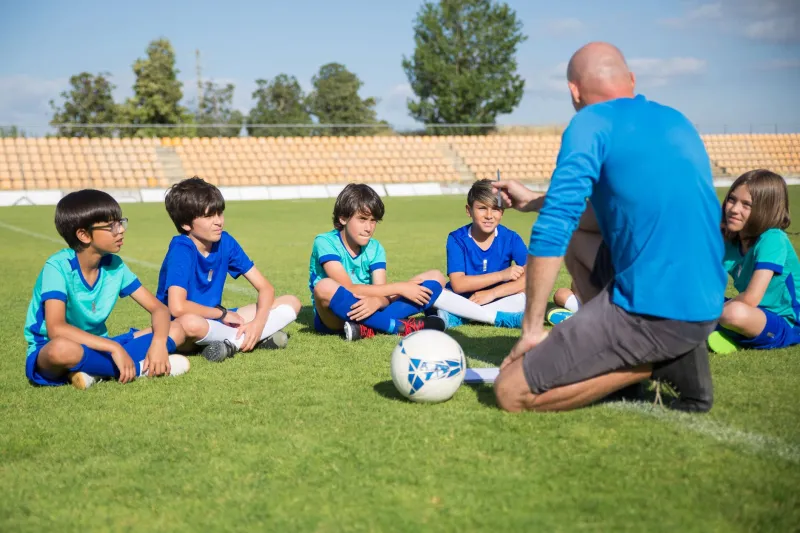
On a Saturday morning in suburban Columbus, Ohio, a youth soccer coach named Marcus Webb opens practice the same way he has for the past three seasons — not with a drill, not with a warm-up lap, but with a moment of stillness. His players, ranging in age from ten to thirteen, stand in a straight line, hands at their sides, and bow to one another before a single ball is touched. It takes less than thirty seconds. But according to Webb, it changes everything that follows.
"Kids come in hot," he says. "They're distracted, they're competing for attention, they're already arguing about who got more playing time last week. That bow resets the room. It says: we're here for something larger than any one of us."
Webb is not a martial artist by training. He stumbled upon Bushido — the ancient Japanese warrior code that governed the samurai — after reading about its principles in the context of leadership development. What he found was not a relic of a distant culture, but a practical framework for exactly the problems he was watching unfold on his field every weekend.
A Code Built for More Than Combat
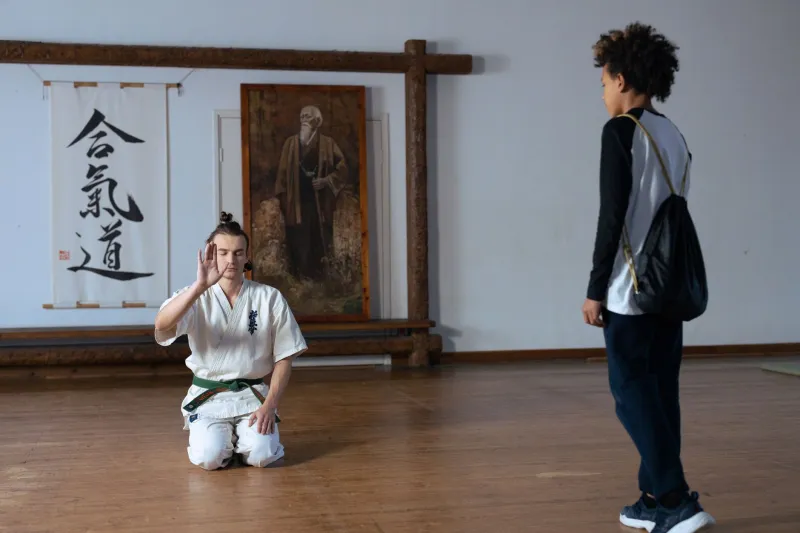
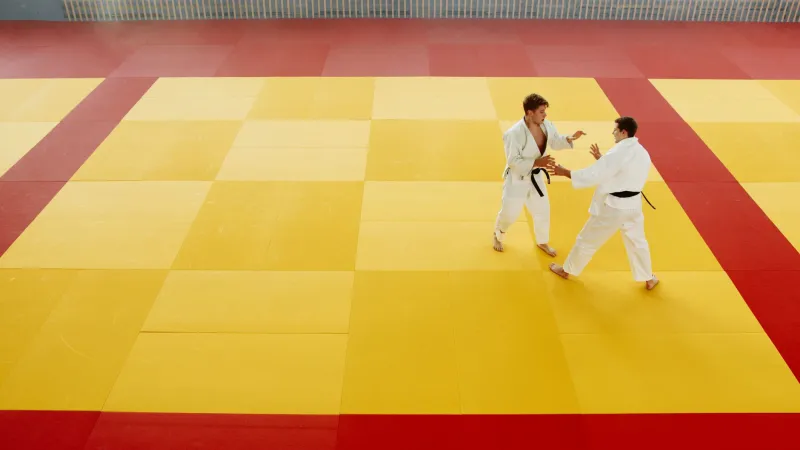
Bushido, at its core, is a system of virtues: rectitude, courage, benevolence, respect, honesty, honor, and loyalty. For centuries, these principles guided the conduct of Japan's warrior class — not only on the battlefield, but in every dimension of daily life. At HanzoEdu, we often describe Bushido as a compass rather than a rulebook. It does not tell you exactly what to do. It orients you toward who you are trying to become.
That distinction matters enormously when applied to young athletes. Contemporary youth sports culture in America has become, by many accounts, a pressure cooker. Travel teams compete year-round. Specialization begins as early as age seven. Parents invest thousands of dollars in private coaching, and the emotional stakes attached to wins and losses have risen accordingly. Burnout among youth athletes is well-documented, and the dropout rate from organized sports between the ages of eleven and thirteen remains stubbornly high.
Into this environment, a small but growing cohort of coaches is introducing something the modern youth sports apparatus rarely discusses: character as a competitive advantage.
Respect Before Results
In Tucson, Arizona, Little League baseball coach Diana Reyes began incorporating Bushido-inspired rituals three years ago after her team's season collapsed not from a lack of talent, but from internal conflict. "We had kids throwing helmets, blaming each other, sulking in the dugout," she recalls. "We were technically capable of winning. We just didn't know how to be on the same side."
Reyes introduced what she calls the "warrior check-in" — a brief pre-practice circle in which each player states one thing they are grateful for and one thing they are committed to improving that day. The format draws directly from the samurai tradition of daily self-reflection, a practice known in Japanese as hansei. Within two months, Reyes noticed a measurable shift. Players began correcting their own errors before she had to address them. Older kids started mentoring younger ones without being prompted.
"The parents noticed before I did," she says. "They started asking me what I was doing differently. A few of them even asked if I could share the approach with them for use at home."
Collective Honor Over Individual Glory
One of the most powerful — and perhaps most countercultural — aspects of Bushido as applied to youth sports is its emphasis on collective honor. In the samurai tradition, a warrior's reputation was inseparable from the reputation of the clan. Individual excellence was valued, but never at the expense of the group's integrity.
This stands in sharp contrast to the AAU basketball circuit or the travel baseball world, where individual statistics often drive recruiting decisions and where young athletes are frequently encouraged to prioritize personal visibility over team cohesion.
Coach Jerome Pittman runs a competitive youth basketball program in Atlanta serving players aged twelve to sixteen. He began studying samurai philosophy after a former player — now a college athlete — told him that the most valuable thing he had learned in youth sports was not a crossover dribble, but how to lose with dignity.
"That hit me hard," Pittman says. "Because I hadn't taught him that. He figured it out in spite of the system, not because of it."
Pittman now structures his practices around what he calls the "seven pillars" — a simplified, age-appropriate rendering of Bushido's core virtues. Each pillar is introduced over the course of the season, discussed briefly, and then reinforced through specific drills and team decisions. The pillar of gi (rectitude or moral justice) might be discussed during a scrimmage in which a player is asked to call their own foul. The pillar of rei (respect) governs how players address referees, opponents, and each other during disagreements.
"It gives them a language," Pittman explains. "Instead of telling a kid 'stop being selfish,' I can say 'what does jin ask of you right now?' And they actually think about it."
How Parents Are Responding
Parental reception to Bushido-influenced coaching has been, by most accounts, cautiously enthusiastic. Some parents initially express skepticism — wondering whether ancient Japanese philosophy has any business on an American soccer pitch. But resistance tends to soften quickly when results become visible.
A common observation among parents is that their children begin applying the vocabulary and principles outside of practice. Kids who have been introduced to the concept of makoto (sincerity and honesty) start demonstrating greater transparency about mistakes at home. Children who have practiced the ritual of the pre-game bow begin greeting adults with more deliberate eye contact.
There are, of course, parents who prefer a more conventional approach and express concern that time spent on philosophical reflection is time taken away from skill development. Coaches who have navigated this pushback generally recommend transparency from the outset — explaining the framework clearly at the season's opening meeting and framing it in terms parents already value: accountability, respect, and resilience.
The Missing Ingredient
What these coaches are identifying, collectively, is a gap that no amount of technical training can fill. American youth sports has become extraordinarily good at developing physical skill and tactical understanding. It has been far less effective at cultivating the internal qualities that determine how an athlete behaves when the pressure peaks, when the score is lopsided, or when a teammate makes a costly error.
Bushido does not promise to make children better athletes in the narrow, statistical sense. What it offers is something more durable: a framework for understanding why they compete, what they owe to those beside them, and who they are becoming through the act of showing up, practicing with intention, and accepting both victory and defeat with composure.
At HanzoEdu, we believe that the dojo mindset is not confined to the walls of a training hall. It travels. It adapts. And in the hands of thoughtful coaches working with young Americans, it is quietly producing something the scoreboard cannot measure — young people who know how to be part of something greater than themselves.
That may be the most important skill any coach can teach.