The Focused Blade: How the Samurai's Art of Presence Is Unlocking Creative Breakthroughs for American Artists
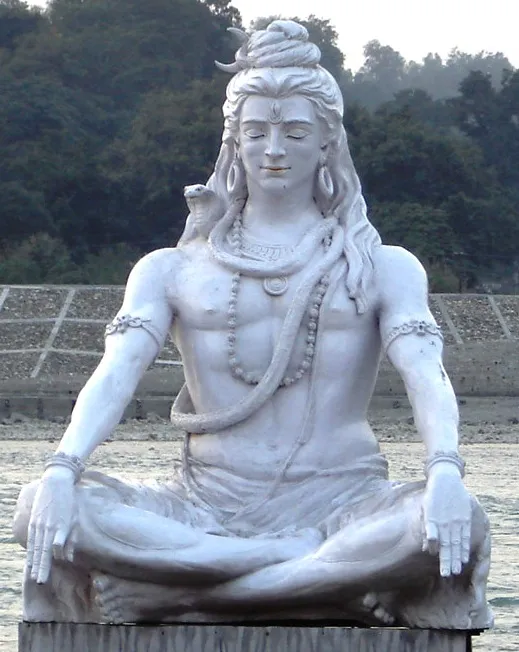
Photo: Iqbal Mohammed, CC BY-SA 2.0, via Wikimedia Commons
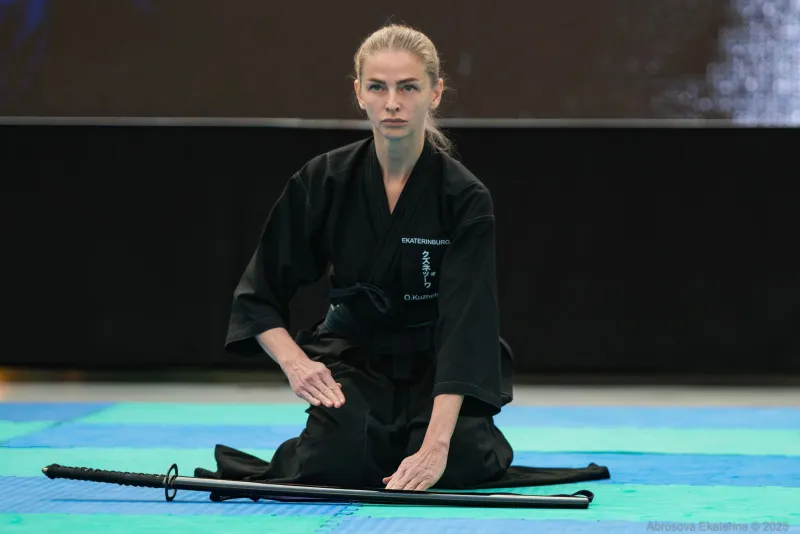
There is a moment in Kendo practice that experienced practitioners describe with unusual consistency. The body is still. The mind has ceased its restless cataloguing of past and future. There is only the opponent, the breath, and the precise instant of action. In Japanese martial tradition, this state carries a name: mushin — the mind without mind, a consciousness so fully present that hesitation dissolves entirely.
It is not, on the surface, an obvious resource for a painter staring at a blank canvas in Brooklyn, or a songwriter sitting mute before a piano in Nashville. And yet, a quiet but compelling movement is emerging among American creatives who are finding that the warrior's discipline of concentrated presence may be exactly what their art has been missing.
Creativity's Real Enemy
Before examining what the samurai tradition offers, it is worth naming what it is designed to counter. The dominant crisis in contemporary creative life is not a lack of ideas — it is an inability to dwell long enough within a single idea for it to mature. Notifications, algorithmic feeds, the constant low hum of digital obligation: these forces have restructured the attention spans of even disciplined artists in ways that are only beginning to be fully understood.
Marcus Webb, a visual artist and muralist based in Chicago, describes the problem with disarming candor. "I would sit down to work and within twenty minutes my mind was somewhere else entirely. I was physically in the studio but mentally I was scrolling, replanning, second-guessing. The painting was suffering for it."
Webb's encounter with Kendo focus practices came through an unexpected route — a community center class he joined primarily for physical fitness. What he discovered altered his relationship to his creative work in ways he had not anticipated. "The instructor kept returning to this idea that the sword does not hesitate. The hesitation is in the practitioner. I started asking myself what my hesitation was in the studio. And I started training myself out of it the same way."
The Discipline of the Single Stroke
Kendo, the Way of the Sword, demands a quality of attention that is both fierce and surrendered. A practitioner cannot succeed by thinking about the strike. The body must be trained so thoroughly that thought becomes unnecessary — action arises from a depth of preparation rather than from conscious deliberation. This is not passivity. It is the highest form of active readiness.
For creative practitioners, the parallel is precise. The novelist who has internalized her characters so deeply that dialogue arrives without effort, the jazz musician who has transcended the mechanics of the instrument to speak through it — these are expressions of the same principle. Mastery creates the conditions for flow. Discipline makes spontaneity possible.
Laura Chen, a composer and music educator in Seattle, began integrating Kendo breathing and attention practices into her daily composition sessions after a period she describes as "two years of creative paralysis." The results, she reports, were not immediate but were unmistakable. "I started with five minutes of what my sensei called 'settling the field' before I touched the keyboard. Eyes closed, breath regulated, attention brought fully into the room. Within three weeks, I was completing pieces I had abandoned. Within three months, I was writing music I hadn't been capable of before."
The Warrior's Studio: Practical Applications
The practices that creatives are borrowing from the samurai tradition tend to cluster around a few core disciplines, each of which has a direct application to artistic work.
Zanshin, or sustained awareness, is the practice of maintaining full attention not only during the peak moment of action but throughout the entire arc of engagement. For a painter, this translates to remaining fully present with the canvas through the difficult middle stages of a work — the phase where doubt and dissatisfaction are most likely to derail progress. Training zanshin means learning to observe those internal states without being governed by them.
Fudoshin, the immovable mind, refers to a quality of equanimity that remains stable under pressure. Writers who have trained this capacity describe it as the ability to receive criticism — from editors, from audiences, from their own inner critic — without losing the fundamental commitment to the work. The warrior does not abandon the field because the battle is difficult.
Kime, the decisive focus of energy in a single moment of action, corresponds in creative practice to the discipline of committing fully to a creative decision rather than perpetually revising in a state of anxious indecision. Photographer and visual artist Darnell Osei of Atlanta describes this as the most transformative concept he has encountered. "I used to take three hundred photographs and feel uncertain about all of them. Now I train myself to see clearly before I press the shutter. The samurai teaches you that the decisive moment is prepared for, not stumbled upon."
Why This Matters Now
The intersection of martial discipline and creative practice is not entirely new — Japanese artists and swordsmanship have shared philosophical ground for centuries, from the calligrapher's single committed brushstroke to the ceramicist's willingness to risk the kiln. What is new is the urgency with which American creatives are seeking this grounding.
In an era that monetizes distraction and rewards rapid output over depth, the samurai's insistence on full presence is, in its own way, a radical act. To sit before one's work with an undivided mind, to commit to a single brushstroke or a single phrase with the totality of one's attention — this is not a productivity hack. It is a philosophical stance.
At HanzoEdu, we understand that the Way of Hanzo extends far beyond the training hall. The warrior's disciplines of focus, presence, and committed action are as applicable in the studio as they are on the mat. For American artists willing to look to this tradition, the creative breakthrough they have been seeking may lie not in more stimulation, but in the cultivated stillness of the focused blade.