Past Fifty and Just Beginning: How Bushido Is Giving Middle-Aged Americans a New Map for What Comes Next
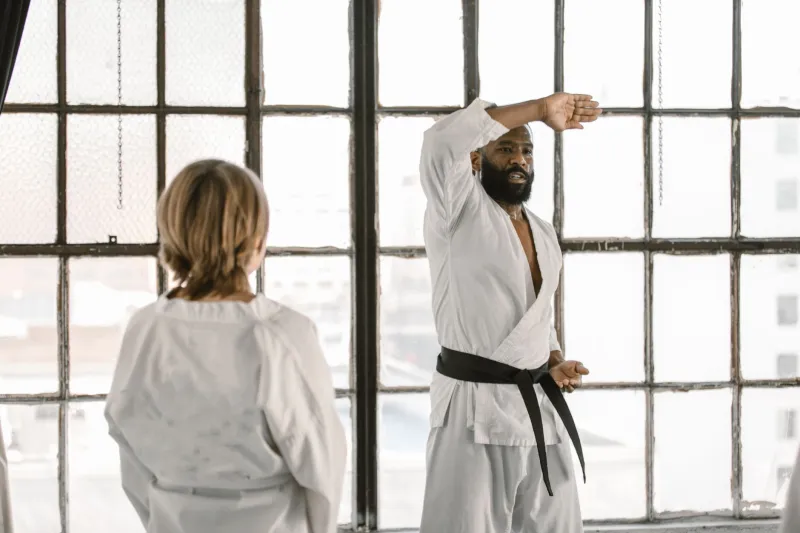
American culture has long operated on a particular assumption: reinvention is a young person's game. Startup founders are celebrated at twenty-six. Career pivots make headlines when they happen before forty. The cultural machinery of ambition is calibrated, almost entirely, for the first half of life.
But something is shifting. Across the country, a quieter revolution is unfolding in community dojos, online study groups, and early-morning meditation rooms — one that challenges the notion that transformation has an expiration date. Its unlikely engine? The seven-hundred-year-old code of the Japanese warrior.
The Moment the Map Runs Out
For many Americans in their fifties and sixties, the experience of midlife transition is less a crisis than a disorientation. The children leave. The career that once defined them plateaus or disappears. The marriage that organized their days looks different in the quiet. Retirement, long imagined as a destination, arrives and feels more like a blank page than a reward.
Denver-based marketing executive Carol Whitfield describes her fifty-third year as the moment her internal compass stopped working. After twenty-two years building a regional advertising firm, she sold her stake to a larger agency and found herself, for the first time in her adult life, without a role to inhabit. "I had every material thing I'd worked for," she says. "And absolutely no idea who I was without the work."
A colleague suggested she try a local kenjutsu class — not as therapy, but as something to do with her hands. Within three months, Whitfield had enrolled in a broader study of Bushido philosophy. Within a year, she had restructured her sense of self around its principles.
"The samurai didn't wait for permission to begin again," she says. "That idea — that you could face an entirely new chapter with discipline and intention rather than fear — changed everything for me."
What Bushido Actually Offers the Midlife Mind
Bushido, the ethical and philosophical code that governed samurai conduct, is often reduced in popular culture to its most dramatic expressions: honor, loyalty, the acceptance of death. But its deeper architecture is considerably more nuanced — and considerably more applicable to the challenges of modern American midlife than most people expect.
The principle of giri, or duty, asks practitioners to identify what they are genuinely called to serve — not what the market rewards, not what their résumé reflects, but what demands their best effort. For someone whose professional identity has just dissolved, this is not an abstract exercise. It is an urgent one.
Rei, the principle of respectful courtesy, reframes relationships during a period when social structures are often in flux. Empty nesters frequently report a profound awkwardness in their marriages once the shared project of child-rearing concludes. Bushido's emphasis on deliberate, dignified engagement offers a concrete practice for rebuilding intimacy with intention.
Perhaps most powerfully, the samurai concept of zanshin — a state of relaxed, continuous awareness — directly addresses the anxiety that so often accompanies midlife transition. Where American productivity culture demands constant forward momentum, zanshin teaches practitioners to remain fully present in the current moment, alert without being reactive. For those accustomed to measuring their worth by output, this is a genuinely radical reorientation.
The Dojo at Fifty-Seven
Retired Chicago firefighter Marcus Tolan walked into his first martial arts class at fifty-seven with, by his own admission, significant skepticism. He had spent thirty years in a profession that prized toughness, hierarchy, and collective identity. The idea of studying philosophy alongside people half his age felt, he says, "a little ridiculous."
What he found instead was a community that valued exactly what his career had cultivated: discipline, composure under pressure, and the willingness to put in unglamorous work over a long period of time. His sensei, he recalls, made a point early in his training that has stayed with him. "She said that the samurai who had survived the most battles were rarely the youngest or the fastest. They were the ones who had learned to read situations clearly and act without hesitation. She looked right at me when she said it."
Tolan now assists with training at the same dojo, working specifically with other first responders navigating retirement. He has also begun studying Japanese calligraphy, a practice he describes as the most demanding thing he has ever done. "People think retirement is rest," he says. "For me, this is the first time I've really been challenged to grow."
Challenging the Cultural Narrative
The resistance to midlife reinvention in American culture is not merely attitudinal. It is structural. Hiring practices, educational models, and social scripts all operate on the assumption that formation happens early and consolidation happens later. The result is a cultural environment in which a fifty-five-year-old beginning something new is treated as an anomaly rather than a norm.
Bushido offers a direct counter-narrative. The samurai tradition did not assign greater value to youth. Mastery was understood as a lifelong process, with the deepest understanding arriving only after decades of practice and accumulated experience. The elder practitioner was not a relic of earlier competence — they were its fullest expression.
This reframing matters enormously for Americans at midlife, who are often navigating genuine grief about what they are leaving behind while simultaneously being told, by a culture oriented toward youth, that the most significant chapters of their lives are already written.
They are not.
Practical Pathways In
For those drawn to explore Bushido as a framework for midlife reinvention, the entry points are more accessible than they may appear. Martial arts programs specifically welcoming adult beginners exist in virtually every metropolitan area and in many smaller communities. Online platforms, including resources available through HanzoEdu, offer structured study of samurai philosophy that can be integrated into a working life without requiring physical training.
Journaling practices drawn from samurai tradition — particularly the discipline of daily reflection on one's conduct and intentions — require nothing beyond paper and time. Reading primary texts, including the Hagakure and Miyamoto Musashi's The Book of Five Rings, provides direct access to the philosophical tradition without the mediation of modern self-help interpretation.
The common thread across all of these entry points is intentionality. Bushido does not promise transformation through passive absorption. It demands active engagement, honest self-assessment, and a willingness to begin — regardless of age, regardless of what came before.
The Warrior Who Has Already Lived
There is a particular quality that experienced practitioners often observe in students who come to martial arts and samurai philosophy later in life. They carry something the younger students do not yet possess: a genuine understanding of loss, of impermanence, of the cost of inattention. These are not deficits to be overcome. In the Bushido tradition, they are precisely the materials from which the deepest practice is built.
The samurai's path was never designed for those who had everything ahead of them. It was designed for those who understood, with full clarity, that every moment of purposeful action is borrowed time — and that borrowed time, lived with discipline and intention, is the only kind worth having.
For the growing number of Americans discovering this tradition past fifty, that understanding is not a consolation. It is an invitation.