Forged in the Factory: How Blue-Collar Americans Are Discovering the Warrior's Code in Honest Work
Forged in the Factory: How Blue-Collar Americans Are Discovering the Warrior's Code in Honest Work
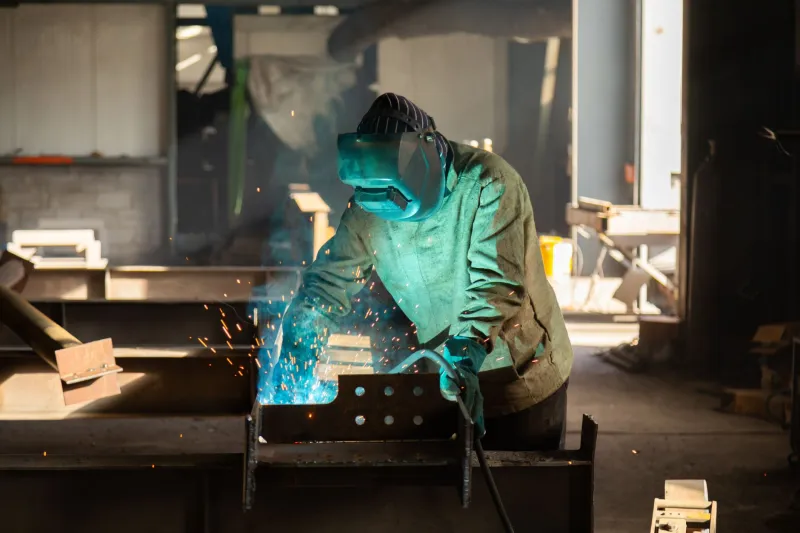
On a Tuesday morning in Youngstown, Ohio, Marcus Delray arrives at the steel fabrication plant forty minutes before his shift begins. He does not spend that time scrolling his phone or waiting in the break room. Instead, he stands quietly near his workstation, reviewing the day's tolerances and mentally rehearsing the sequence of cuts he will make. His coworkers have come to expect this ritual. Some smile. A few have started arriving early themselves.
Delray, a structural welder with seventeen years of experience, began studying Bushido — the philosophical code that governed the conduct of Japan's samurai class — three years ago through a community dojo in his neighborhood. What he found was not a relic of feudal Japan. It was a mirror.
"Everything I was already trying to do at work — the precision, the accountability, the pride in getting it right — it was all there," he says. "The samurai had a name for it. I just hadn't had one before."
The Warrior Code Meets the Working Class
Bushido, which translates roughly as "the way of the warrior," is a moral framework built on virtues including rectitude, courage, benevolence, respect, honesty, honor, and loyalty. For centuries, these principles shaped the conduct of Japan's military class. Today, they are finding an unexpected audience among tradespeople, factory workers, and laborers across the United States who are searching for a language — and a philosophy — capable of dignifying what they do.
This is not a fringe phenomenon. From machine shops in Michigan to logging operations in the Pacific Northwest, small but growing communities of working Americans are incorporating Bushido study into their lives. Some connect through martial arts dojos that have expanded their curriculum to include philosophical instruction. Others gather in informal reading groups, studying texts like Yamamoto Tsunetomo's Hagakure or Inazo Nitobe's Bushido: The Soul of Japan alongside coworkers and neighbors.
What draws them is not the romance of the sword. It is the radical proposition that disciplined, skillful, honest labor is itself a form of warrior practice.
Shokunin: The Artisan Who Never Stops Improving
Central to this working-class engagement with Japanese philosophy is the concept of shokunin — a Japanese term that refers to an artisan or craftsperson who has devoted their life to the relentless pursuit of mastery in their trade. The shokunin does not simply perform a job. They inhabit it. Every action is an opportunity to refine technique, eliminate error, and honor the materials and tools at hand.
In Japanese culture, the shokunin spirit is visible in everything from the sushi chef who spends a decade learning to prepare rice before touching fish, to the carpenter who regards each joint as a moral statement about their character.
For American tradespeople, this framework carries enormous resonance. In a culture that has long celebrated white-collar achievement while rendering skilled labor invisible, the shokunin ethic offers something radical: the assertion that a perfectly executed weld, a precisely laid course of brick, or a flawlessly assembled component is not merely functional — it is an act of mastery worthy of profound respect.
Lisa Harmon, a pipefitter and apprenticeship instructor in Pittsburgh, encountered the shokunin concept through a HanzoEdu study group that meets monthly at a local dojo. She now incorporates it into how she trains new apprentices.
"I tell them that every pipe they hang is a reflection of their character," she says. "If it's crooked, that's who you were that day. If it's perfect, that's who you chose to be. That's not just a trade lesson. That's a life lesson."
Giri and the Honor of Showing Up
Alongside shokunin, the Bushido concept of giri — often translated as duty or obligation — has proven equally compelling to working Americans navigating the psychological weight of demanding, repetitive, or physically punishing labor.
In the samurai tradition, giri was not a burden to be endured. It was a source of identity and integrity. To fulfill one's duty completely, without complaint and without cutting corners, was among the highest expressions of character a warrior could offer. The samurai who shirked giri did not merely fail a task — they diminished themselves.
For workers who clock into the same building, perform the same operations, and absorb the same physical toll year after year, giri reframes what might otherwise feel like monotony. The repetition becomes practice. The showing up becomes a daily act of honor.
Derek Castillo, a forklift operator at a distribution center in San Antonio, Texas, began attending a local kendo class two years ago. What began as a fitness pursuit became a philosophical awakening.
"I used to think my job was something I just had to get through," he says. "Now I think of every shift as a commitment I made. Not to the company — to myself. To the people who depend on what I do. That shift in thinking changed everything about how I show up."
Dojos as Community Anchors in Working-Class Neighborhoods
The dojos facilitating this transformation are often modest spaces — converted storefronts, church basements, community center back rooms — located in the same neighborhoods where their students live and work. They are not boutique fitness studios catering to affluent professionals. They are community institutions, and their instructors are increasingly aware of the specific needs their working-class students bring through the door.
In Flint, Michigan, Sensei Raymond Okafor runs a martial arts school that has deliberately woven Bushido philosophy into its curriculum following conversations with students who worked in the automotive supply chain. He noticed that many arrived not merely seeking physical training, but searching for something harder to name — a sense that what they did for a living mattered.
"These are people who build things that hold the world together," Okafor says. "They just haven't always been told that. Bushido tells them that. And once they hear it through the lens of the warrior tradition, it lands differently than a motivational poster ever could."
His dojo now hosts a monthly discussion series on warrior philosophy open to non-martial-arts students. Attendance has grown steadily, drawing electricians, nurses' aides, bus drivers, and sanitation workers alongside his regular training students.
Reclaiming Dignity Through the Warrior's Lens
At its core, the movement taking root on American shift floors and job sites is about reclamation. It is an act of refusal — a rejection of the cultural narrative that assigns worth based on title, salary, or educational credential rather than on the quality of one's effort, the depth of one's commitment, and the integrity of one's craft.
Bushido does not rank the carpenter below the executive. It measures both by the same standard: Did you bring your full self to what you were called to do? Did you act with honesty, precision, and honor? Did you hold the line when it was difficult?
For blue-collar Americans who have long sensed that their labor deserved more recognition than the broader culture was willing to grant, these are not abstract philosophical questions. They are deeply personal ones.
Marcus Delray, back on the floor in Youngstown, puts it simply. "People walk past a skyscraper and think about the architect," he says. "Nobody thinks about the welder who made sure it wouldn't fall down. Bushido made me stop needing them to. I know what I did. I know it was right. That's enough."
The warrior, it turns out, has always been here — forging, building, hauling, and holding things together. He simply needed a code worthy of his work.