When the War Comes Home: How the Samurai Path Is Helping American Veterans Heal, Rebuild, and Rediscover Purpose
For many Americans who return from military service, the transition back to civilian life is not a homecoming so much as a disorientation. The structure, the brotherhood, the sense of mission — all of it dissolves with a discharge paper. What remains is frequently a profound identity crisis, compounded in many cases by post-traumatic stress disorder, chronic pain, or the invisible wounds that no imaging scan can locate.
Conventional treatment pathways — medication, cognitive behavioral therapy, group counseling — have helped countless veterans. Yet a growing number of former service members are finding that something older, something forged in the martial traditions of feudal Japan, speaks to their condition in ways that modern clinical frameworks do not always reach. They are walking through the doors of dojos, picking up wooden bokken, and beginning to study the Way of the Warrior.
The Language Warriors Already Speak
There is a reason the samurai ethos resonates so immediately with many veterans. The principles embedded in bushido — the traditional code of the Japanese warrior class — are not foreign concepts to someone who has served in the United States military. Loyalty, self-discipline, courage in the face of death, acceptance of mortality, and the subordination of ego to a larger purpose: these are values that American service members live long before they ever hear the word bushido.
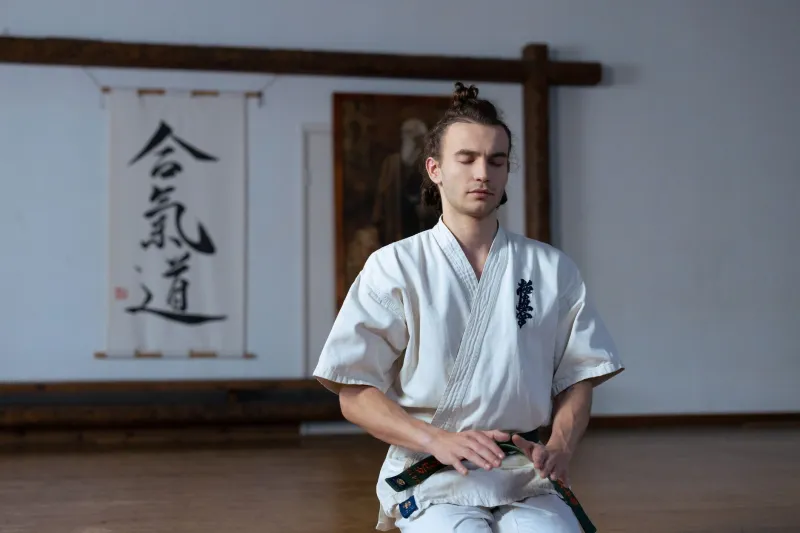
What the samurai tradition offers, however, is something the military does not always provide upon separation: a philosophical framework for carrying the warrior identity into peacetime. In the bushido texts, the warrior is not simply a fighter. He or she is a cultivated human being — someone who practices calligraphy and poetry alongside swordsmanship, who studies Zen alongside strategy. The dojo, in this context, is not merely a place of physical training. It is a place of ongoing formation.
For veterans wrestling with the question of who they are when the uniform comes off, that distinction matters enormously.
Programs on the Front Lines of Recovery
Several organizations across the United States have recognized this connection and built structured programs around it. Warrior's Way, a nonprofit operating primarily in the Pacific Northwest, pairs combat veterans with experienced martial arts instructors trained in both budo practice and trauma-informed facilitation. Participants begin with foundational work in aikido and iaido — disciplines that emphasize breath, presence, and controlled movement — before progressing to deeper engagement with samurai philosophy through guided readings and group discussion.
In Texas, a program called The Ronin Project works specifically with veterans experiencing moral injury, the particular form of psychological damage that results not from fear but from actions taken or witnessed that violate one's own ethical code. The program's founder, a Marine Corps veteran and longtime practitioner of kenjutsu, has spoken publicly about how the samurai concept of zanshin — a state of relaxed, sustained awareness — gave him a language for the hypervigilance he carried home from two deployments. "The military teaches you to stay switched on," he has noted. "Zanshin teaches you how to stay present without being consumed by it."
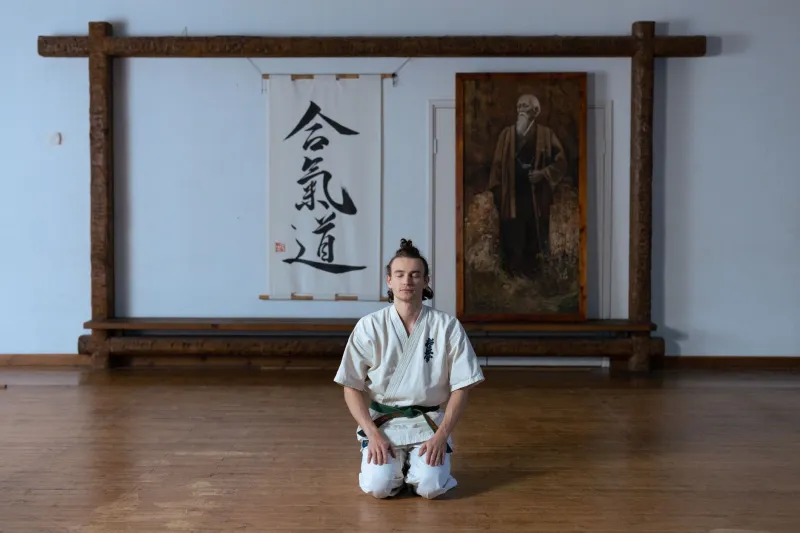
On the East Coast, several VA-affiliated wellness programs have begun formally incorporating elements of Japanese martial philosophy into their integrative health offerings, recognizing that disciplines like judo, kendo, and even the seated meditative practice of mokuso can complement clinical treatment by addressing the body and the spirit simultaneously.
The Body Remembers What the Mind Tries to Forget
One of the more compelling arguments for martial arts as a healing modality is rooted in what trauma researchers have come to understand about how PTSD is stored. The work of practitioners such as Dr. Bessel van der Kolk has illuminated the degree to which traumatic memory lives not only in cognition but in the nervous system itself — in the body's reflexes, its tension patterns, its capacity for safety and rest.
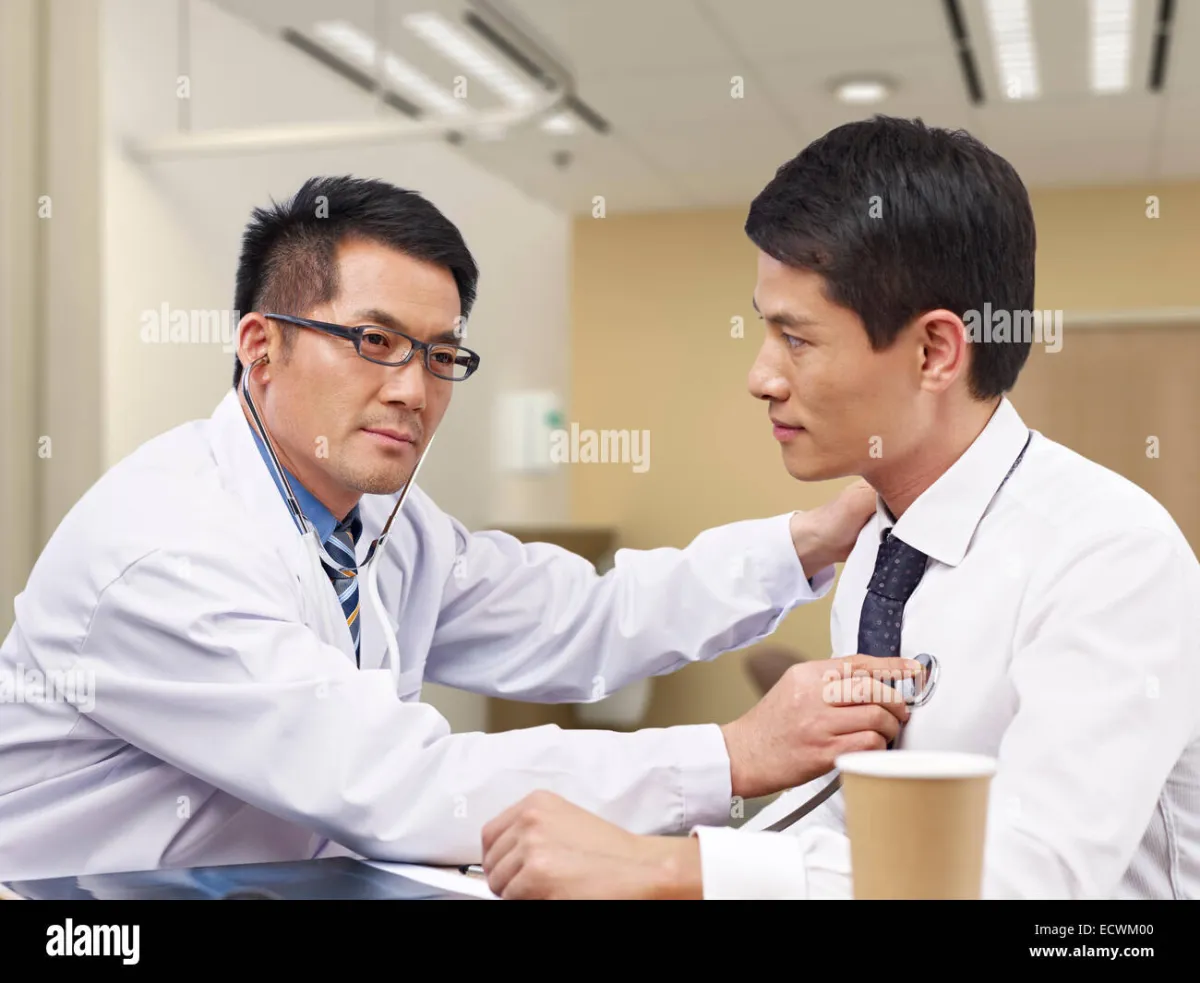 Photo: Dr. Bessel van der Kolk, via c8.alamy.com
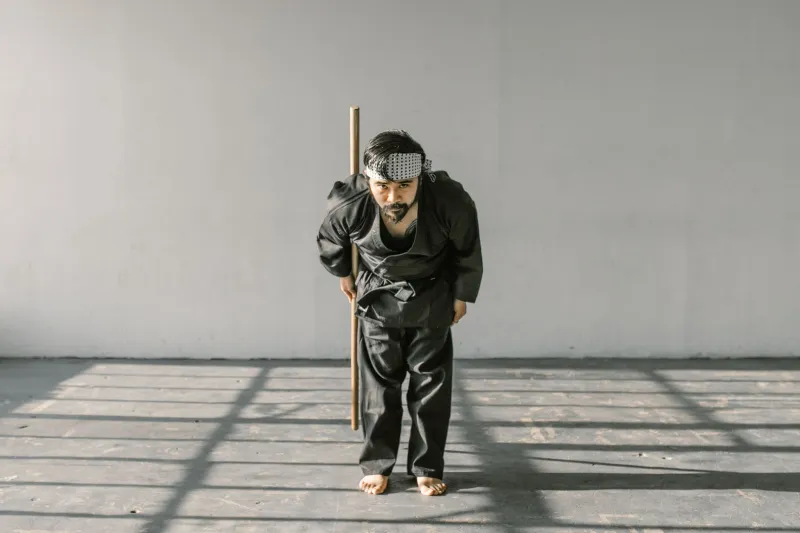
Traditional Japanese martial arts, perhaps more than many Western fitness disciplines, engage the body and the mind as an inseparable unit. The formal bow at the entrance to the dojo, the precise repetition of kata, the cultivation of ma-ai — the awareness of distance and timing in relation to another person — all of these practices require a quality of embodied attention that gradually rewires the practitioner's relationship to their own physical experience.
For veterans whose nervous systems have been calibrated by combat, this kind of disciplined, ritualized physical engagement offers something that a therapy session alone cannot: the experience of being fully in one's body in a context that feels purposeful, structured, and safe.
Bushido and the Question of Identity After Service
Perhaps the deepest gift that samurai philosophy offers the veteran community is a way of understanding the warrior identity as something that does not end with the mission. In the feudal Japanese tradition, the ideal samurai was a lifelong student — of martial skill, yes, but equally of ethics, aesthetics, and self-mastery. The sword was understood as a tool of refinement as much as a tool of war.
This stands in productive contrast to the way modern American culture tends to relate to its veterans: honoring their service while implicitly framing it as something that belongs to the past. The message veterans too often receive upon return is that they must now become something other than warriors. Bushido offers a different proposition — that the warrior path deepens and evolves, that discipline and courage and vigilance can be redirected toward the cultivation of the self and the service of the community.
For veterans who have built their entire identity around service and sacrifice, this reframing is not a small thing. It is, for many, a lifeline.
The Dojo as Community
Beyond philosophy and physical practice, there is a simpler and equally important dimension to what the dojo provides: belonging. One of the most consistent findings in veteran mental health research is that social isolation significantly worsens outcomes. The military creates intense bonds precisely because shared hardship and shared purpose fuse people together in ways that ordinary civilian social life rarely replicates.
The dojo, at its best, functions as a community in the deepest sense of the word. Students train together, fail together, support one another through plateaus and breakthroughs. The hierarchical structure — the progression through ranks, the relationship between sensei and student — provides a form of meaningful social order that many veterans find grounding after the formlessness of early civilian life.
A Path Forward
None of this is to suggest that traditional Japanese martial arts represent a replacement for professional mental health care. Veterans dealing with severe PTSD, suicidal ideation, or substance dependency require and deserve clinical support. The dojo is not a hospital.
But it can be something the hospital is not — a place where the warrior in the veteran is not treated as a wound to be managed, but as a foundation to be built upon. Where the discipline forged in service is not discarded but redirected. Where ancient wisdom and modern need meet on a wooden floor, in the stillness before the bow.
At HanzoEdu, we believe that the Way of Hanzo is not merely a historical artifact. It is a living tradition, and for the men and women who have carried the weight of American service, it may be one of the most meaningful paths forward available today.