Separating Scroll from Screen: What Museum Archives Actually Reveal About the Real Shinobi
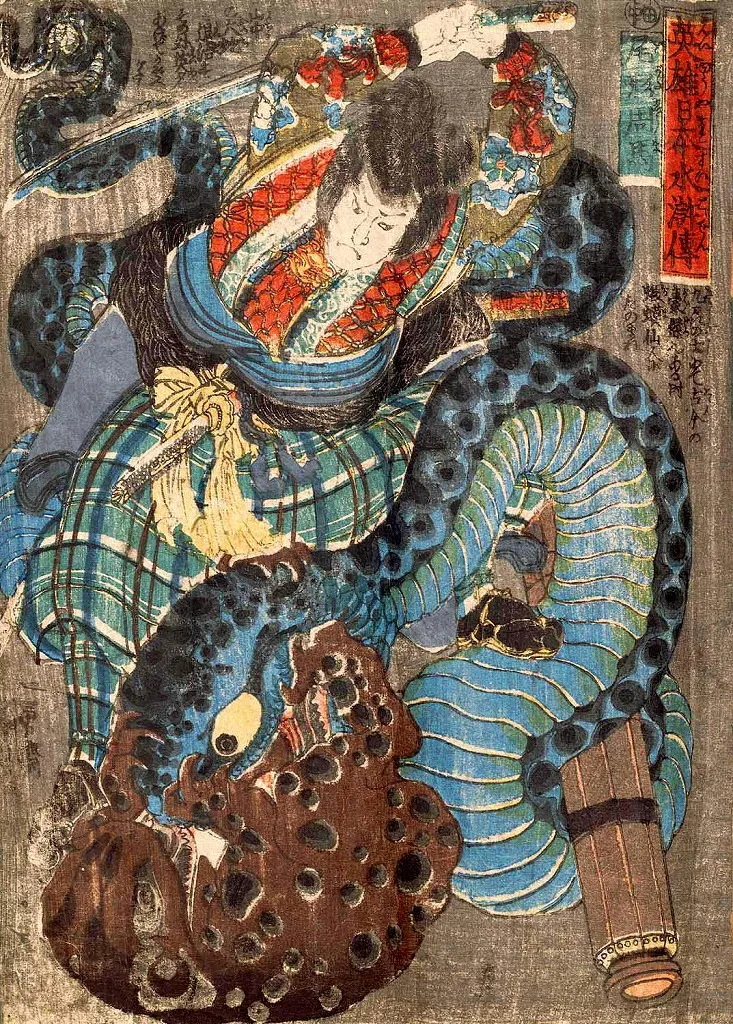
Photo: Utagawa Kuniyoshi, Public domain, via Wikimedia Commons
Few figures in world history have been as thoroughly reinvented as the ninja. In American pop culture, the shinobi is a black-clad acrobat: rooftop runner, smoke-bomb vanisher, five-tools-in-a-belt assassin. It's a compelling image. It is also, according to the historical record, mostly fiction — assembled from samurai cinema, Cold War-era spy novels, and eight decades of Hollywood layering.
The genuine article, preserved in feudal-era texts and the collections of institutions like Japan's Iga-ryu Ninja Museum and the Mie Prefectural archives, tells a different story. And the differences matter, because the real shinobi's methods are more useful to a modern learner than any fantasy.
Tool One: The Written Record, Not the Grappling Hook
Start with the famous kaginawa, the grappling hook every movie ninja carries. Hooks and climbing cords did exist in feudal Japan — but as generic equipment used by laborers, besieging soldiers, and burglars alike. No period manual treats them as signature shinobi gear. What does fill the historical manuals is something duller and heavier: ink. Texts such as the Bansenshukai devote entire chapters to memorizing maps, codes, passwords, and the political relationships of rival domains. The ninja's most prized possession was information, and the primary tool for carrying it was a trained memory.
Tool Two: The Straw Sandal, Not the Black Suit
The all-black shinobi shozoko costume appears nowhere in feudal sources. Historians generally trace it to Japanese stagehand tradition — kabuki theater dressed property handlers in black so audiences would ignore them, and playwrights realized a "stagehand" slipping across the scene made a perfect assassin. Real operatives dressed to blend in: as monks, farmers, performers, merchants. The lesson embedded in the disguise is one of radical adaptability. The shinobi survived by looking ordinary, not exceptional.
Tool Three: Fire and Smoke — For Cooking, Mostly
Yes, smoke appears in the historical record. But period accounts describe its use for signaling across distances, creating diversion during retreats, and — most often — the mundane chemistry of torches and campfires on long observation missions. The cinematic "throw a pellet and vanish" trick has no documented basis. What the manuals do document extensively is patience: shinobi might lie in hiding for days, cataloguing gate rotations, guard schedules, and supply levels. Endurance of boredom was a core competency.
Tool Four: The Farm Implement, Not the Fancy Blade
The iconic straight-bladed ninjatō sword, worn on the back and loaded with gadgets, is a modern invention. Feudal operatives carried whatever was plausible for their cover identity — often ordinary katana, agricultural tools, or nothing sharper than a kunai, which was primarily a multipurpose digging and prying implement, not a throwing knife. Historical shinobi were, above all, practical. A tool that drew attention was a tool that got you caught.
Tool Five: The Calendar
Perhaps the least glamorous entry, and the most powerful. Feudal manuals are obsessive about timing: phases of the moon, seasonal weather, festival calendars, shift changes. Missions were planned around when the target would be least alert. The shinobi understood something modern productivity culture keeps rediscovering — that when you act matters as much as what you do.
Why the Truth Is Better Than the Legend
There's a certain disappointment in learning the ninja never carried smoke bombs. But sit with the record a little longer and a richer figure emerges: not a superhero, but a professional observer — disciplined, patient, disguised in plain sight, armed with preparation rather than gadgetry.
That is a figure worth studying. The fantasy ninja asks you to believe in magic. The historical one asks you to develop memory, adaptability, and timing — skills that, unlike a grappling hook, you can actually train. At HanzoEdu, that distinction is the whole curriculum: the legend gets the movie deal, but the record gets the results.