Before the Electric Light Broke Our Nights: What Feudal Japan Knew About Rest That America Forgot

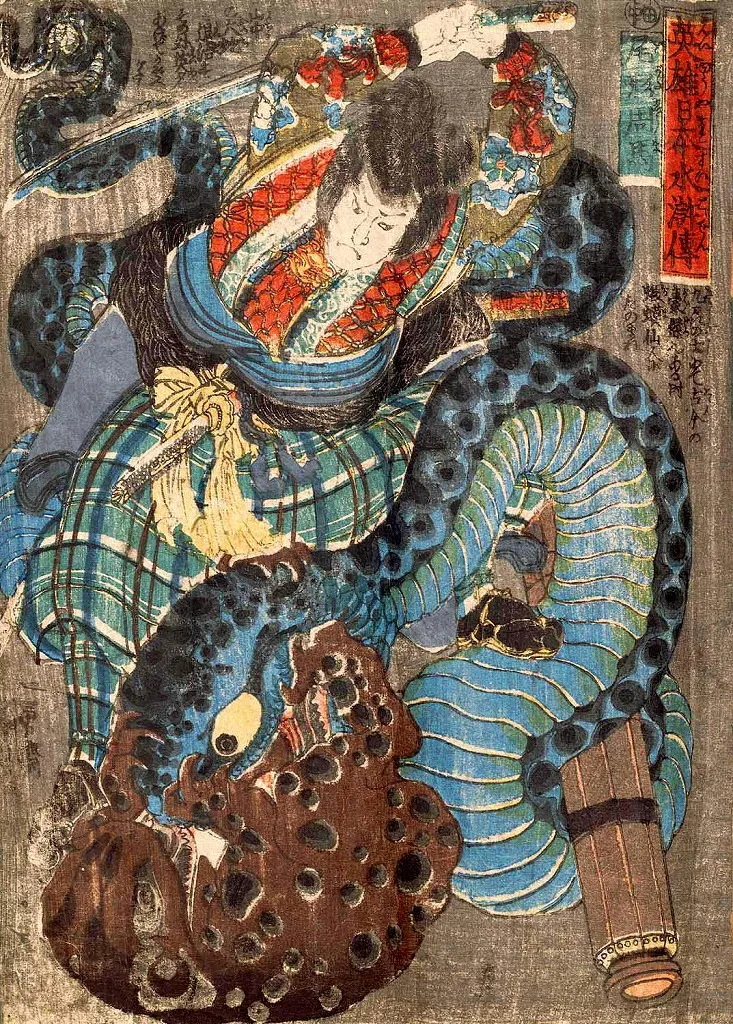
Photo: Rudolph.A.furtado, CC0, via Wikimedia Commons
Here is a claim that sounds heretical in a country where the sleep-aid industry does billions of dollars in annual business: the eight-hour, uninterrupted night is not a biological birthright. It is a cultural invention—recent, fragile, and increasingly under strain.
Feudal Japan knew this. And its warriors, interestingly, may have mastered it better than we have.
The Segmented Night Was the Norm
Before electric lighting, human sleep across much of the world ran in segments. Historians of sleep—Roger Ekirch's research on pre-industrial Europe is the landmark work here—document a "first sleep" and "second sleep" divided by a period of quiet wakefulness in the deep of night, sometimes lasting an hour or more. People prayed, talked, tended fires, or simply rested in the dark.
Japan's pre-modern world followed a similar rhythm. In homes lit by oil lamps and candles, nights were fluid. Farmers and townspeople alike rose during the night; the boundary between sleep and waking was a landscape, not a wall. The notion that a night of sleep must arrive in one continuous block would have struck them as strange—and, if interrupted, a cause for alarm. For us, waking at 3 a.m. signals dysfunction. For them, it signaled nothing at all.
The Shinobi's Rule: Rest Completely, or Not at All
Within this world, the shinobi developed something even more deliberate. Historical ninjutsu texts and clan traditions emphasize that before a mission, a scout slept—thoroughly and without compromise. A warrior who departed exhausted was a liability; fatigue dulled the senses that constituted his entire value. Rest was not indulgence. It was mission-critical equipment, prepared with the same care as a blade.
The deeper discipline was this: the shinobi slept when rest was possible so they could perform when it was not. Total rest before total exertion. There was no ambient middle state—no half-rested, half-alert, caffeine-bridged existence. You were restored or you were not deployed.
Compare that to the American night-shift nurse, the long-haul driver, the on-call engineer—people asked to function continuously in the gray zone the shinobi refused to occupy.
What the Science Says
Modern research gives the historical picture unexpected support. Studies of biphasic and segmented sleep suggest that the two-sleep night is well within human circadian capacity, and that short, deliberate naps can restore alertness with measurable effects on reaction time and judgment. NASA's research on pilot naps, the widespread adoption of inemuri-adjacent rest culture in Japan—the evidence points one direction: humans are more flexible sleepers than our institutions assume.
What the evidence does not support is the arrangement we actually live with: nights compressed by artificial light, days stretched by screens, and a national caffeine habit doing the work that darkness used to do.
The Monoculture Is the Experiment
The opinion this page will not soften: our eight-hour monoculture of sleep is a recent experiment, run on an entire population, and the results are posted daily in the form of shift-worker burnout, sleep-aid dependence, and 3 p.m. desk crashes. We treat the individual as the problem— prescribing gadgets, pills, and shame—when the schedule itself deserves scrutiny.
There are practical openings. Hospitals and fire departments are beginning to pilot planned napping. Employers of night workers could schedule around circadian science rather than against it. Individuals can stop panicking when they wake at night, and instead treat the quiet interval as something older than their anxiety about it.
And the shinobi's pre-mission rule deserves a wider audience: rest is preparation, not a reward. Before the hardest days—the surgery, the exam, the newborn weeks—Americans should sleep like it matters, completely and without apology.
The feudal night was dark, and because it was dark, it was shaped differently. We cannot get the darkness back. But we can stop pretending the sleep our ancestors knew was a defect, and start asking whether our own arrangement is the thing that needs fixing.