The Sword Behind the Scoreboard: How Kenjutsu Principles Are Quietly Revolutionizing Elite American Athletics
There is a moment — familiar to any seasoned athlete — that exists just before a play unfolds, a race begins, or a ball leaves a pitcher's hand. It is a fraction of a second dense with information: spatial awareness, bodily tension, anticipatory calm. For centuries, Japanese swordsmen called this moment the threshold of mastery. Today, a growing number of America's elite sports coaches and performance psychologists are borrowing that ancient vocabulary — and the rigorous training philosophy behind it — to push athletes beyond what conventional conditioning alone can achieve.
This is not a trend born of novelty. It is the product of serious inquiry into what separates competent athletes from transcendent ones.
A Discipline Older Than the Playbook
Kenjutsu — the classical Japanese martial art of swordsmanship, predating the more widely recognized sport of kendo — was never merely about cutting technique. At its philosophical core, kenjutsu was a system for cultivating total human performance: physical precision, psychological stillness, and an almost preternatural capacity for reading space and time. Practitioners trained not just their muscles but their minds, learning to perceive their environment with a clarity that modern sports scientists would recognize as elite-level situational awareness.
Two principles in particular have attracted the attention of American performance specialists: zanshin and ma-ai.
Zanshin — loosely translated as "remaining mind" or "sustained awareness" — describes the state of alert, composed attention that a swordsman maintains before, during, and after any exchange. It is the opposite of tunnel vision. Rather than collapsing focus onto a single stimulus, zanshin demands a wide, receptive consciousness that can process multiple inputs simultaneously without losing center.
Ma-ai refers to the dynamic management of distance and timing — the precise calibration of spatial relationship between oneself and an opponent. In kenjutsu, miscalculating ma-ai by even inches could prove fatal. In modern athletics, the same principle governs the difference between a cornerback who reads a route correctly and one who arrives half a step too late.
What the Coaches Are Saying
Dr. Marcus Ellery, a sports psychologist based in Denver who has worked with collegiate track programs and NFL combine prospects, began studying kenjutsu formally after reading translated texts on classical Japanese martial philosophy. What he encountered, he says, was a structured system for developing exactly the cognitive qualities that sports science had long struggled to train efficiently.
"We spend enormous resources on physical periodization — strength, speed, agility," Ellery has explained in conference presentations. "But the mental side of elite performance, particularly sustained attentional control under high-stakes conditions, has always been harder to systematize. Kenjutsu gave me a framework that was already thousands of years in the making."
Ellery now incorporates zanshin-based attention drills into pre-competition routines for sprinters, asking athletes to enter a state of broad, non-reactive awareness before the starting blocks — a deliberate counterweight to the anxiety-driven hyper-focus that often undermines performance at critical moments.
On the field, similar conversations are happening. Offensive line coaches at several major university programs — speaking informally rather than for institutional attribution — have described introducing ma-ai concepts into footwork and positioning drills. The idea is straightforward: if a lineman can internalize the fluid, adaptive management of distance that a swordsman develops over years of practice, his ability to mirror, redirect, and neutralize a pass rusher improves in ways that pure strength training cannot replicate.
The Body as the Blade
Beyond psychology, kenjutsu's physical demands offer athletes something increasingly rare in an era of sport-specific specialization: whole-body integration.
The classical sword draw — the foundational movement of iaijutsu, a closely related discipline — requires the simultaneous coordination of hips, shoulders, wrists, and breath in a single, economical motion. Nothing is wasted. Every part of the body contributes to the outcome. This principle of kime — focused, total-body commitment to a single movement — maps directly onto the mechanics of an elite golf swing, a baseball throw, or a gymnast's release.
Katrina Voss, a biomechanics consultant who has trained with a kenjutsu instructor in Kyoto and now works with competitive swimmers and track cyclists in the American Midwest, describes the transfer as intuitive once athletes experience it firsthand. "The sword teaches you that power is not about the biggest muscle group," she notes. "It's about the chain. Break the chain anywhere and the technique fails. That's exactly what we're trying to get swimmers to understand about their pull cycle."
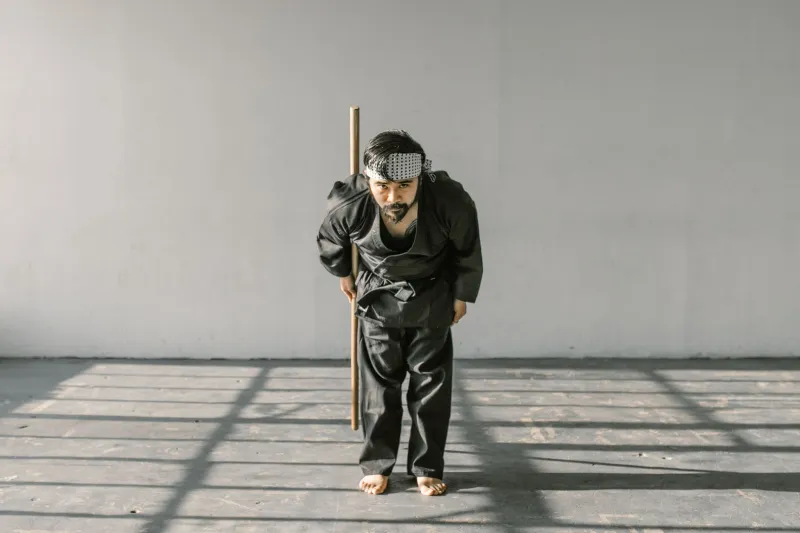
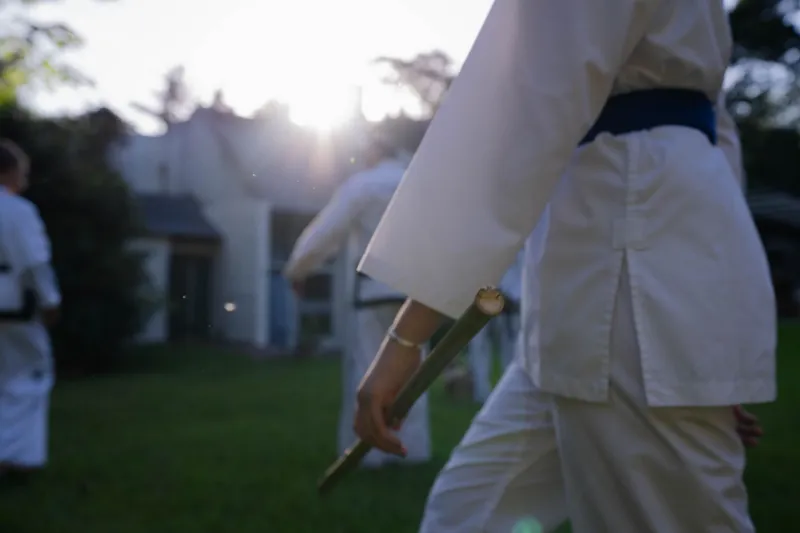
Several Olympic-level coaches have quietly begun incorporating short sword-handling sessions — using wooden bokken rather than live blades — into off-season conditioning blocks. The goal is not to produce swordsmen. It is to use the sword as a mirror, one that reveals compensatory movement patterns, imbalances, and attentional lapses with an honesty that no camera angle or force plate can quite replicate.
Rethinking the Frontier of Sports Training
American sports culture has always been willing to borrow from unexpected sources when the results justify the investment. Yoga entered NFL training rooms decades ago. Meditation apps are now standard issue in many professional locker rooms. Ballet conditioning has long been a staple for running backs and wide receivers seeking body control. In each case, the initial skepticism gave way to pragmatic adoption once performance data aligned with anecdotal reports.
Kenjutsu may be approaching a similar inflection point.
The evidence is still largely qualitative — coaches reporting sharper athletes, psychologists observing improved attentional regulation, biomechanists noting cleaner movement chains. Formal longitudinal studies are only beginning to emerge. But the conceptual architecture is sound, and the practitioners who have engaged with it seriously are not fringe voices. They are credentialed professionals working at the highest levels of American competitive sport.
What kenjutsu offers that few other systems can match is the weight of centuries of refinement. The men and women who developed these principles were not theorists. They were practitioners whose lives depended on the quality of their training. That context does not make the discipline mystical. It makes it serious — and seriousness, in elite athletics, is always worth examining.
The Next Frontier Is Ancient
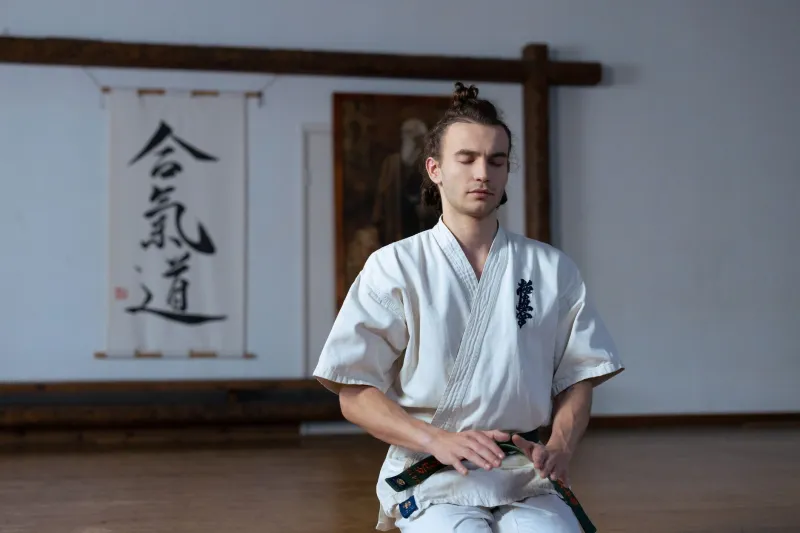
For athletes and coaches willing to look beyond the familiar boundaries of their sport, the dojo holds more than tradition. It holds a methodology for developing the qualities that determine whether a competitor performs adequately or extraordinarily when the margin for error disappears.
The sword, it turns out, is not a relic. In the hands of a thoughtful coach or a curious athlete, it is a diagnostic instrument — one that has been sharpening human performance for far longer than any modern training protocol.
At HanzoEdu, we believe that mastery does not belong exclusively to any one domain. The warrior's path and the athlete's path share more ground than either tradition has historically acknowledged. The coaches and scientists now building bridges between these worlds are not abandoning rigor. They are deepening it.
The question for American athletes and the professionals who guide them is no longer whether ancient disciplines have something to offer modern performance. The question is how much longer they can afford to leave that knowledge untapped.